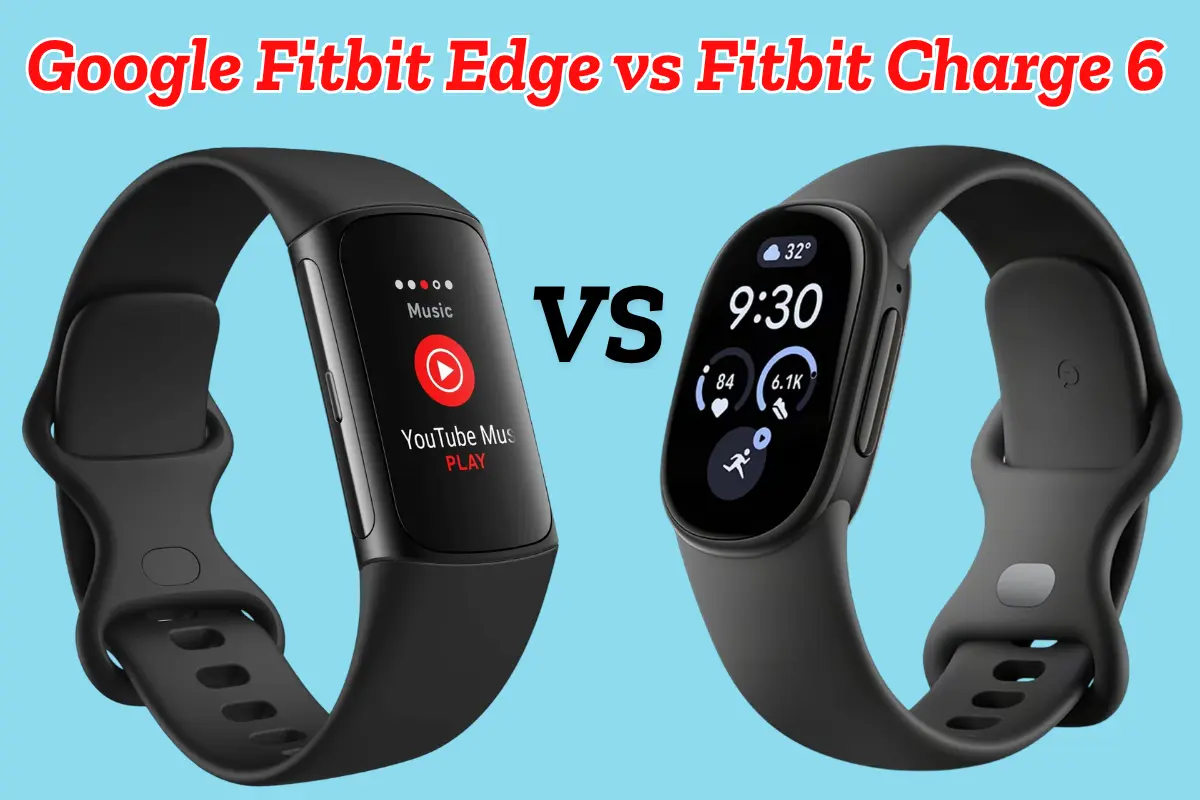
The Google Fitbit Edge vs Fitbit Charge 6 comparison comes down to what matters most to you: a larger display, newer health features, and a replaceable battery, or a more affordable fitness tracker with Google Wallet and useful workout tools.
Google Fitbit Edge is the newer model, priced at $179.99 in the US. The Fitbit Charge 6 is the older option, but it still offers built-in GPS, 24/7 heart rate tracking, sleep monitoring, Google Maps, and contactless payments. Both trackers are designed to help you understand your activity and health without wearing a full smartwatch.
So, is the new Google Fitbit Edge worth paying extra for, or does the Fitbit Charge 6 offer better value in 2026? Let’s compare their features, battery life, health tracking, design, and everyday usefulness to help you decide.
Quick links: Check Google Fitbit Edge on Amazon | Check Google Fitbit Edge on AliExpress | Check Fitbit Charge 6 on Amazon | Check Fitbit Charge 6 on AliExpress
Affiliate disclosure: This article may contain affiliate links. If you buy through one of these links, we may earn a commission at no extra cost to you.
Google Fitbit Edge vs Fitbit Charge 6: Quick Comparison
If you want the main differences without reading the full review, start here.
| Feature | Google Fitbit Edge | Fitbit Charge 6 |
| US launch price | $179.99 | Original list price $159.95; current price varies |
| Display | 1.34-inch color AMOLED | Color AMOLED touchscreen |
| Built-in GPS | Yes | Yes |
| Workout modes | 40+ | 40+ |
| Automatic workout tracking | Recognizes 40+ exercise types | SmartTrack automatic recognition |
| Battery life | Up to 7 days | Up to 7 days |
| Always-on display | Yes; up to 2 days of battery life | Yes; requires more frequent charging |
| Battery replacement | User-replaceable battery | No equivalent user-replaceable battery feature advertised |
| Water resistance | 5 ATM, IP68 | 5 ATM |
| Heart rate tracking | 24/7 | 24/7 |
| Sleep tracking | Sleep stages, HRV, recovery insights | Sleep stages, Sleep Score, sleep insights |
| Built-in altimeter | Yes | Not listed as a dedicated altimeter |
| Google Maps | Yes | Yes |
| Google Wallet | Not listed as a supported feature | Yes |
| YouTube Music controls | Universal Bluetooth media controls | YouTube Music controls |
| Phone compatibility | Android 11+ and iOS 16.4+ | Android 11+ and iOS 16.4+ |
| Premium coaching | Google Health Premium | Google Health Premium |
| Best for | Newer hardware and health tracking | Everyday fitness and contactless payments |
Specifications are based on Google’s product information. Battery life depends on settings and use. Prices and availability can change.
Buy Google Fitbit Edge: Amazon | AliExpress
Buy Fitbit Charge 6: Amazon | AliExpress
- Google Fitbit Edge Review: Is the New Fitness Tracker Worth It?
The Google Fitbit Edge is designed for people who want more information on their wrist without moving to a full smartwatch. It combines a color display, built-in GPS, automatic workout recognition, health sensors, and a replaceable battery in a slim tracker.
Its US price is $179.99, and Google announced it on October 12, 2026. Retail availability is scheduled to begin on October 27, 2026.
Design and Display
The Fitbit Edge measures about 11.5 mm thick and uses a recycled aluminum case. It weighs approximately 17.7 grams without the band, according to Google’s specifications.
Its 1.34-inch AMOLED color display gives you more room to read workout information, check your heart rate, and view notifications. Google says the viewing area is 46% larger than that of previous Fitbit trackers, making the screen easier to use at a glance.
The physical side button is another useful addition. Touchscreens can be awkward when your hands are sweaty or you are in the middle of a workout. A physical button gives you another way to control the tracker.
Google offers the Edge in four standard finishes: Obsidian, Fog, Olive, and Canyon. You can also buy alternative bands separately.
For everyday wear, the slim design should appeal to people who find larger smartwatches uncomfortable during sleep or exercise. However, comfort depends on wrist size, band fit, and personal preference.
Fitness Tracking and GPS
The Google Fitbit Edge supports more than 40 exercise modes and can automatically recognize many common activities. You can start workouts from your wrist and check real-time information while exercising.
Built-in GPS records outdoor routes without requiring your phone to provide the GPS signal. This is useful for running, cycling, and walking when you prefer to leave your phone in your pocket or at home.
Google says its upgraded GPS system can be up to 40% more accurate than previous Fitbit generations. That is the company’s stated comparison, so actual results will depend on the route, surroundings, and GPS conditions.
The integrated altimeter tracks elevation changes. If you run uphill, climb stairs, or hike on uneven ground, elevation data can give you a better picture of the effort involved.
The tracker can also recognize and categorize up to 100 workout types automatically, according to Google’s announcement. This is useful if you sometimes forget to start an activity manually.
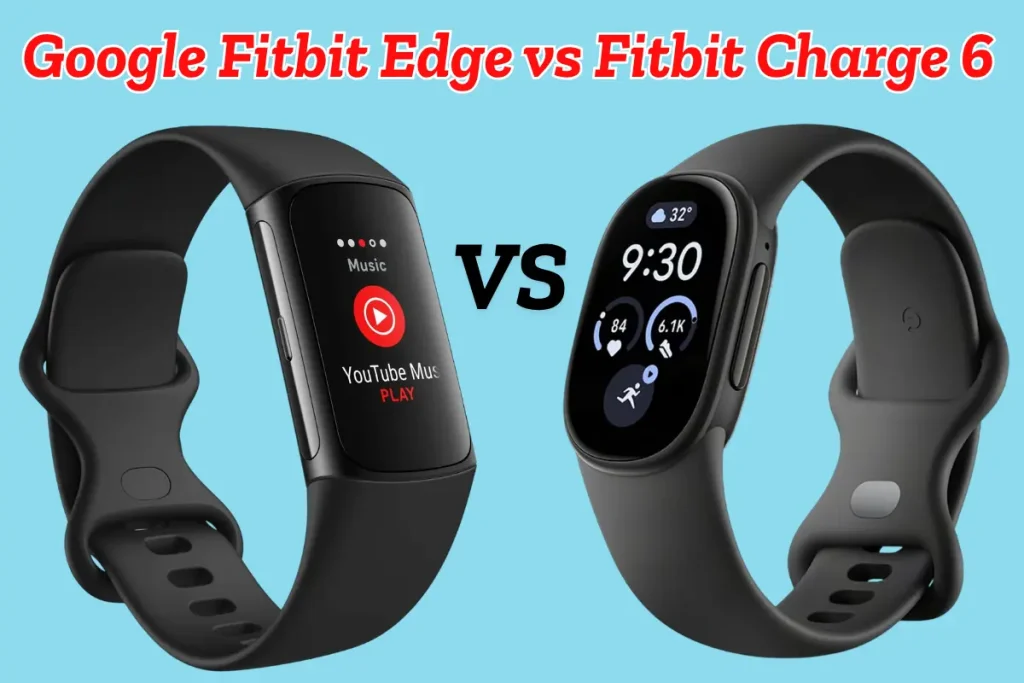
Image Source: Amazon
Health and Sleep Tracking
The Edge monitors heart rate throughout the day and collects information that can help you understand your activity, sleep, and recovery.
Its health features include:
- Continuous heart rate monitoring
- Blood oxygen (SpO2) tracking
- Heart rate variability (HRV)
- Sleep-stage tracking
- Skin temperature variation
- Menstrual cycle tracking
- ECG functionality in supported countries
- High and low heart rate notifications
- Blood pressure and insulin resistance trends, where available
One feature worth understanding is the recovery score. The tracker uses sleep and other health metrics to help summarize how your body may be responding to your recent routine. This can help you decide whether to follow your planned workout or consider taking it easier.
The Edge also supports Google’s Health Coach through the Google Health app. With a Google Health Premium membership, the coach can offer personalized workout suggestions and guidance based on your goals and tracked information.
Three months of Google Health Premium are included with the Edge purchase. The subscription is sold separately after the trial, and some features depend on availability in your country.
These health features are intended to support general wellness. They are not a replacement for medical tests or professional advice.
Battery Life and Charging
Google rates the Fitbit Edge for up to seven days of battery life under its stated battery-saver usage conditions. Actual battery life may be shorter depending on GPS use, notifications, display settings, and other features.
If you use the always-on display, Google says battery life can drop to around two days.
The magnetic charging cable can provide up to a day’s use from a five-minute charge when the battery is low, according to Google. A full charge takes about 90 minutes.
The replaceable battery is one of the most interesting changes. Batteries lose capacity as they age, and a tracker can become less convenient when it needs charging more often. Being able to replace the battery may help extend the Edge’s useful life.
Google says repair options vary by region. It does not provide a universal replacement-battery price in the launch information, so check the available repair options before assuming the replacement will be inexpensive.
Water Resistance and Everyday Features
The Edge has a 5 ATM water-resistance rating and an IP68 rating. Google says it is suitable for use around water under the conditions covered by its ratings, but it is not waterproof or dustproof.
It also supports Google Maps directions, media controls, alarms, timers, and smartphone notifications. You can check information without pulling out your phone every time.
One limitation is worth considering. Google lists universal media controls for the Edge, but it does not list Google Wallet as a supported feature. If paying at stores with your wrist is part of your routine, the Charge 6 has a clear advantage.
Google Fitbit Edge pros
- Larger, brighter display than the Charge 6
- Built-in GPS and elevation tracking
- Automatic recognition of many activities
- Replaceable battery
- Up to seven days of stated battery life
- Advanced health and sleep tracking
- Three months of Google Health Premium included
Google Fitbit Edge cons
- Costs more than the Charge 6 at its original list price
- Always-on display can reduce battery life considerably
- Some health features vary by country
- Personalized coaching requires a paid subscription after the trial
- Google Wallet support is not listed
- Replacement battery cost and regional repair options need checking
Check the latest price: Google Fitbit Edge on Amazon | Google Fitbit Edge on AliExpress
- Fitbit Charge 6 Review: Is It Still Worth Buying in 2026?
The Fitbit Charge 6 remains a practical choice for people who want fitness tracking, GPS, sleep information, and a few useful smart features in a compact band.
It costs less than the Edge at the original list-price level, although the actual price depends on current discounts and retailer stock.
Design and Display
The Charge 6 has a slim body with a color AMOLED touchscreen. Its display is smaller than the Edge’s, but it provides access to workout information, heart rate, daily activity, sleep scores, and smartphone notifications.
The tracker measures approximately 36.73 × 23.09 × 11.20 mm. It comes in several color combinations, including Obsidian with Black Aluminum, Porcelain with Silver Aluminum, and Coral with Champagne Gold Aluminum.
Its smaller display may suit people who prefer a less noticeable tracker. You can wear it throughout the day and overnight without the larger appearance of a conventional smartwatch.
The trade-off is screen space. If you frequently check workout data while moving, the Edge’s larger display should be easier to read.
Fitness Tracking and GPS
The Fitbit Charge 6 supports more than 40 exercise modes, including running, cycling, strength training, and yoga. It tracks steps, distance, calories, and Active Zone Minutes throughout the day.
Built-in GPS records outdoor pace and distance without requiring your phone to supply the GPS signal.
The tracker also supports automatic exercise recognition through SmartTrack. Some automatic activity information is processed in the Google Health app rather than appearing as a fully configured workout on the tracker itself.
For gym users, the Charge 6 has a useful extra. It can connect to compatible exercise equipment and display heart rate information in real time. This can help you monitor workout intensity while using a treadmill, elliptical, or other supported machine.
It also includes Cardio Load and Daily Readiness features. Daily Readiness availability depends on the relevant Google Health Premium membership.
For ordinary walks, runs, and gym sessions, the Charge 6 has most of the core tools many people need. The Edge adds newer hardware and an altimeter, but the older tracker still covers the basics well.
Health and Sleep Tracking
The Charge 6 tracks heart rate around the clock and uses those readings to support other fitness and wellness measurements.
Its main health and sleep features include:
- 24/7 heart rate tracking
- Resting heart rate
- Blood oxygen tracking
- Skin temperature variation
- Heart rate variability
- Sleep stages and Sleep Score
- Stress Management Score
- ECG app in supported countries
- High and low heart rate notifications
- Menstrual health tracking
The Sleep Score offers a quick way to review the previous night’s sleep. You can also view sleep stages and other information in the companion app.
The Smart Wake alarm is another useful addition. It can vibrate during a suitable stage of sleep within the selected wake-up window.
For stress tracking, the Charge 6 provides a Stress Management Score based on body signals. This is an estimate intended to help you understand patterns, not a direct measurement of how stressed you feel.
The Edge has newer health features, including the advertised blood pressure and insulin resistance trends. Those additions may interest people who want more health information over time, but they should not be treated as medical diagnoses.
Battery Life and Charging
Google rates the Fitbit Charge 6 for up to seven days of battery life. That figure is a best-case estimate rather than a guarantee for every user.
GPS sessions, always-on display use, and certain health-monitoring features can increase battery consumption. If you exercise outdoors regularly and use GPS for long sessions, expect to charge it more often than someone who mainly tracks steps and sleep.
The Charge 6 takes about two hours to charge from empty to full, based on Google’s published technical information.
Both trackers have a stated battery life of up to seven days. The Edge’s replaceable battery gives it an advantage for long-term ownership, while the Charge 6 remains a reasonable option if you are happy with its current design and features.
Google Maps, Wallet, and Music Controls
The Charge 6 supports several features that make it useful beyond basic fitness tracking.
Google Maps provides turn-by-turn directions on your wrist. You can also use Google Wallet to make contactless payments at supported payment terminals.
The YouTube Music controls let you manage compatible playback from the tracker. A compatible phone must remain within Bluetooth range, and YouTube Music Premium is required for the relevant music controls.
The tracker also displays call, text, and app notifications when paired with your phone.
These features are helpful for people who want to keep their phone in a pocket or bag during a walk or workout. The Charge 6 is still a fitness tracker, though, rather than a full smartwatch with every app and communication feature.
Fitbit Charge 6 pros
- Often available for less than the Edge
- Built-in GPS
- More than 40 exercise modes
- Google Wallet contactless payments
- Google Maps directions
- YouTube Music controls
- Sleep and stress tracking
- Up to seven days of stated battery life
- Compatible with Android and iPhone
Fitbit Charge 6 cons
- Smaller display than the Edge
- No advertised user-replaceable battery
- No dedicated altimeter listed in its specifications
- Always-on display and GPS use can reduce battery life
- Some advanced insights require Google Health Premium
- Its design and interface are older than the Edge’s
Check the latest price: Fitbit Charge 6 on Amazon | Fitbit Charge 6 on AliExpress
- Google Fitbit Edge vs Fitbit Charge 6: Display and Design
The display is one of the easiest differences to notice on paper.
The Google Fitbit Edge has a 1.34-inch AMOLED color display. Google says its viewing area is 46% larger than previous Fitbit trackers and that it is designed to be easier to read in bright sunlight.
The Charge 6 uses a smaller color AMOLED screen. It can show the main information you need, but there is less room for workout details and other information.
If you often check pace, heart rate, or directions while moving, the Edge is the stronger option. Its physical side button also gives you another way to control the tracker.
The Charge 6 makes more sense if you prefer a compact band and do not need a larger screen. Its smaller body may be easier to forget about during sleep or daily activities.
Neither design is automatically better for every wrist. Band fit, screen readability, and comfort matter more than a specification alone.
Winner: Google Fitbit Edge for display size and newer design. Fitbit Charge 6 remains a good choice for people who prefer a smaller tracker.
- Fitness Tracking: Which Fitbit Is Better for Workouts?
Both trackers have built-in GPS and support more than 40 exercise modes. Both can track common activities and provide information about heart rate, distance, and workout intensity.
The Edge has a newer GPS system that Google says can be up to 40% more accurate than previous Fitbit generations. It also includes an altimeter for elevation tracking and can automatically recognize and categorize up to 100 workout types.
Those features make the Edge more appealing to people who run outside, cycle, hike, or regularly train on routes with elevation changes.
The Charge 6 is still well equipped for everyday fitness. It tracks workouts, Active Zone Minutes, and cardio fitness estimates. Its ability to display heart rate on compatible gym equipment can be especially useful for indoor training.
For someone who mainly walks, does basic gym workouts, or goes for occasional runs, the Charge 6 may provide enough information. Paying extra for the Edge makes more sense if its display, GPS improvements, and elevation tracking match the way you exercise.
Winner: Google Fitbit Edge for outdoor workout features. Fitbit Charge 6 offers the main fitness tools at a potentially lower price.
- Health Tracking: Edge vs Charge 6
Health tracking is more than counting steps. Both devices monitor heart rate, sleep, and other signals that can help you understand changes in your daily routine.
The Charge 6 covers common needs with sleep stages, a Sleep Score, stress tracking, skin temperature variation, blood oxygen tracking, and an ECG app in supported regions.
The Edge includes many of these features and adds advertised blood pressure trends, insulin resistance trends, and newer health-guidance tools. Availability depends on the country and device, and some functions may require a Google Health Premium membership.
The Edge’s recovery information may be useful if you want to compare sleep, activity, and heart rate patterns when planning workouts. Its Health Coach is designed to provide personalized guidance, but you will need to decide whether the subscription is worth paying for after the included trial.
It is important to keep the limits in mind. Neither tracker can diagnose a medical condition. Blood pressure and insulin resistance trends are not substitutes for clinical readings or medical tests, and the ECG feature is available only in supported locations and for eligible users.
Winner: Google Fitbit Edge for its newer advertised health features. Fitbit Charge 6 remains suitable for everyday wellness tracking.
- Battery Life: Which Tracker Lasts Longer?
At first glance, battery life is a tie. Google rates both the Edge and Charge 6 for up to seven days on a charge.
Real-world battery life depends on how you use them. Frequent GPS workouts, an always-on display, and other active features can reduce the time between charges.
The Edge has a useful charging advantage. Google says five minutes of charging can provide up to a day’s use when the battery is low. A full charge takes about 90 minutes.
The Charge 6 takes around two hours to charge fully, according to Google’s technical information.
The Edge also has a feature that matters after months or years of use: its battery is designed to be replaceable. Battery capacity naturally declines over time, and replacement may help keep the tracker in service for longer. Repair options and costs vary by region.
Winner: Google Fitbit Edge. Both have a seven-day maximum rating, but the Edge charges faster and has a user-replaceable battery.
- Smart Features: Google Wallet, Maps, and Notifications
This comparison has a result that may surprise some buyers.
The Google Fitbit Edge is the newer tracker, but Google does not list Google Wallet support for it. The Edge does support Google Maps directions, smartphone notifications, quick replies, and universal Bluetooth media controls.
The Fitbit Charge 6 supports Google Wallet, so you can make contactless payments at compatible terminals. It also provides Google Maps directions and YouTube Music controls.
For people who regularly pay for coffee, groceries, or public transport with a wearable, Google Wallet can be more useful than a larger display. Availability still depends on your location, payment card, and supported services.
The Charge 6’s YouTube Music controls have their own requirement: YouTube Music Premium is needed for the relevant controls, and your compatible phone must be within Bluetooth range.
The Edge’s universal media controls can handle playback from a Bluetooth-connected phone, but they should not be confused with standalone music streaming.
Winner: Fitbit Charge 6 for contactless payments. The Edge offers a newer interface and useful controls, but the Charge 6 has the clearer advantage if you want Google Wallet on your wrist.
- Water Resistance and Durability
Both trackers are rated for water resistance up to 50 meters under their stated conditions.
The Fitbit Edge has a 5 ATM rating and an IP68 rating. The Charge 6 has a 5 ATM rating.
These ratings do not mean the devices are waterproof in every situation. Water exposure, pressure, temperature, and wear can affect their condition, so follow the manufacturer’s care instructions.
The Edge’s aluminum case and replaceable battery may appeal to buyers thinking about long-term ownership. The Charge 6 has a compact design and a well-established set of everyday fitness features.
If you plan to swim, check the official guidance for your exact activity and avoid assuming that a water-resistance rating covers every water sport.
Winner: Google Fitbit Edge on the listed durability specifications, thanks to its additional IP68 rating and replaceable battery. Both have a 5 ATM rating.
- Price and Value for Money
The Google Fitbit Edge launched at $179.99 in the United States. The standard Fitbit Charge 6 originally carried a $159.95 list price, although Google’s store has displayed discounted pricing. Retail prices can change, so check the current price before buying.
At the Edge’s launch price, the difference from the Charge 6’s original list price is $20. That is not a huge gap if the Edge’s new features are useful to you.
You get a larger display, an altimeter, upgraded GPS hardware, fast charging, and a replaceable battery. It also includes three months of Google Health Premium.
The Charge 6 may offer better value when a retailer discounts it. You still get built-in GPS, sleep tracking, heart rate monitoring, Google Maps, and Google Wallet.
Remember to consider the cost of Google Health Premium after any included trial ends. You do not need to value every premium feature equally, and you should not pay for a subscription simply because the tracker offers it.
Winner: Fitbit Charge 6 for budget-conscious buyers. Google Fitbit Edge may be worth the extra cost if you want the newer hardware and battery-replacement option.
- Who Should Buy Google Fitbit Edge?
The Google Fitbit Edge is a better fit for people who want a fitness tracker with a larger screen and more detailed information available on the wrist.
Consider the Edge if you:
- Run, cycle, or hike outdoors and want built-in GPS with elevation tracking.
- Prefer a larger display for checking workout details.
- Want newer health and recovery features.
- Like the idea of replacing the battery instead of replacing the whole tracker.
- Want quick charging and do not mind paying more for newer hardware.
- Plan to use Google’s personalized health coaching.
Before buying, check whether the health features you want are available in your country. Also consider the subscription cost after the included three-month Google Health Premium trial.
The Edge is not the best choice for everyone. If Google Wallet is important to you, the Charge 6 currently has a clear advantage based on the published feature lists.
- Who Should Buy Fitbit Charge 6?
The Fitbit Charge 6 is a sensible option if you want to monitor daily activity, exercise, sleep, and heart rate without spending more for the newest tracker.
Consider the Charge 6 if you:
- Want a compact fitness tracker.
- Mainly walk, run, cycle, or work out at the gym.
- Want built-in GPS without carrying your phone for GPS tracking.
- Use Google Wallet for contactless payments.
- Want Google Maps directions and YouTube Music controls.
- Find it at a good discount.
- Do not need the Edge’s altimeter or replaceable battery.
The Charge 6 is particularly appealing if its current sale price is substantially lower than the Edge’s. A lower price can matter more than a newer display when both devices already cover your everyday tracking needs.
- Google Fitbit Edge vs Fitbit Charge 6: Which One Wins?
The Google Fitbit Edge wins this comparison for people who want the newer hardware. Its larger AMOLED display gives you more room to view information, the altimeter adds elevation data to outdoor workouts, and Google’s upgraded GPS system is designed to improve tracking accuracy. Fast charging is convenient, while the user-replaceable battery is a meaningful advantage for anyone who wants to keep a tracker for several years.
The Edge also has newer advertised health features, including blood pressure and insulin resistance trends where supported. These additions may appeal to people who want to follow more health patterns over time. Still, they are wellness tools rather than medical tests, and some features depend on country availability or a premium subscription.
The Fitbit Charge 6 has a different kind of advantage. It already handles many everyday fitness needs, including built-in GPS, heart rate monitoring, sleep tracking, stress information, and more than 40 exercise modes. Google Wallet is another strong reason to choose it. If you often pay with your wrist, that feature may be more useful in daily life than the Edge’s larger screen or extra health metrics.
Price is the other deciding factor. If the Charge 6 is heavily discounted, you may save money without losing the features you use most. If the prices are close, the Edge’s improved display, altimeter, charging speed, and replaceable battery make a stronger case for spending more.
My verdict: Choose the Google Fitbit Edge if you want the more advanced fitness tracker and expect to use its newer features. Choose the Fitbit Charge 6 if you want reliable everyday tracking, Google Wallet, and a lower purchase price. There is no reason to upgrade simply because the Edge is newer. The better choice is the one that fits your workouts, daily habits, and budget.
Check current prices before you decide:
- Google Fitbit Edge: Amazon | AliExpress
- Fitbit Charge 6: Amazon | AliExpress
Frequently Asked Questions
- Is Google Fitbit Edge better than Fitbit Charge 6?
The Google Fitbit Edge has a larger display, an altimeter, upgraded GPS hardware, fast charging, and a replaceable battery. The Fitbit Charge 6 supports Google Wallet and may cost less. The better choice depends on which features you need.
- What is the price of Google Fitbit Edge in the USA?
Google announced a US price of $179.99 for the standard Google Fitbit Edge. The Stephen Curry Special Edition is priced at $219.99. Check Google’s store for current availability and pricing.
- Is Fitbit Charge 6 worth buying in 2026?
Yes, the Fitbit Charge 6 can still be worth buying if you find it at a good price. It offers built-in GPS, heart rate monitoring, sleep tracking, Google Maps, Google Wallet, and more than 40 exercise modes.
- Does Google Fitbit Edge have built-in GPS?
Yes. Google Fitbit Edge has built-in GPS, so it can record outdoor workouts without relying on your phone to provide the GPS signal.
- Does Fitbit Charge 6 have Google Wallet?
Yes. Fitbit Charge 6 supports Google Wallet for contactless payments at compatible terminals. Payment availability depends on your location, bank, and supported card.
- How long does the Google Fitbit Edge battery last?
Google rates the Edge for up to seven days under specified usage conditions. With the always-on display enabled, the stated battery life drops to up to two days. Actual results depend on your settings and usage.
- Can you replace the Google Fitbit Edge battery?
Yes. Google describes the Edge as having a user-replaceable battery. Repair options can vary by region, and you should check the official instructions and costs before arranging a replacement.
- Does Fitbit Charge 6 have built-in GPS?
Yes. The Fitbit Charge 6 has built-in GPS for tracking outdoor pace and distance without needing your phone to provide GPS data.
- Is Google Fitbit Edge compatible with iPhone?
Yes. Google lists compatibility with most iPhones running iOS 16.4 or later. A Google Account, the Google Health app, and an internet connection are also required.
- Does Google Fitbit Edge track blood pressure?
Google advertises blood pressure trends as a Health Guardian feature for supported regions and devices. These trends are not real-time clinical blood pressure readings and should not be used to diagnose hypertension or change medication.
- Does Fitbit Charge 6 track sleep and stress?
Yes. The Charge 6 tracks sleep duration and stages, provides a Sleep Score, and offers a Stress Management Score. Some detailed insights require Google Health Premium.
- Should I upgrade from Fitbit Charge 6 to Google Fitbit Edge?
Consider upgrading if you want the larger display, elevation tracking, newer GPS hardware, faster charging, and replaceable battery. If your Charge 6 meets your fitness needs and you use Google Wallet, keeping it may be the better value.
Final Recommendation
The Google Fitbit Edge is the stronger choice for newer hardware, while the Fitbit Charge 6 remains a practical fitness tracker with useful payment features. Compare the current prices and decide which differences matter to your daily routine.
Related reading: Google Fitbit Edge Review and Features
Find the Latest Deals and Coupon Codes: Visit our homepage for available gadget deals, buying guides, and coupon codes.
Affiliate disclosure: This article may contain affiliate links. If you buy through one of these links, we may earn a commission at no extra cost to you.