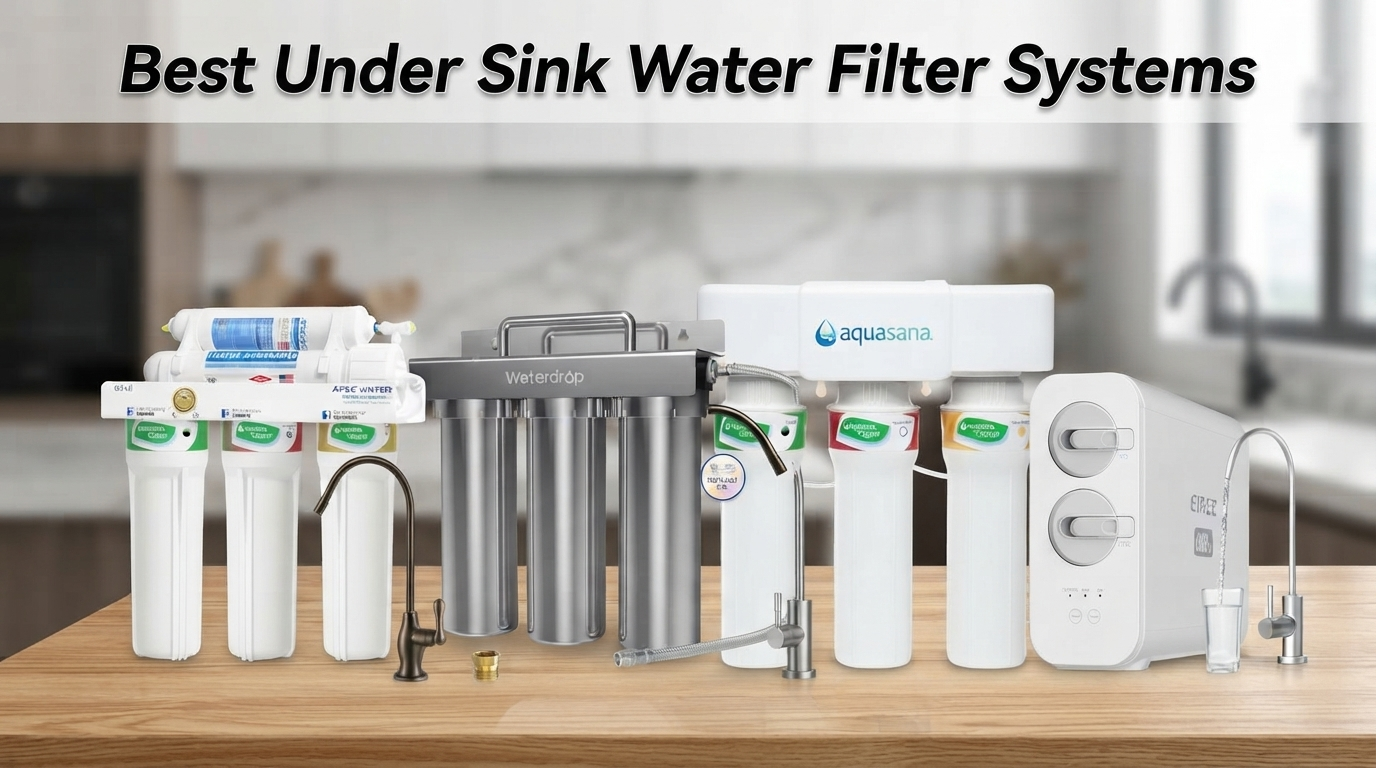
Looking for the best under sink water filter systems in 2026? The right under sink water filter can improve the taste of tap water, reduce specific contaminants, and give your household a convenient source of drinking water without taking up counter space.
However, these systems work in different ways. Some use carbon or ultrafiltration to improve taste while keeping most dissolved minerals. Others use reverse osmosis (RO) to reduce total dissolved solids (TDS), fluoride, lead, and other contaminants, depending on the model and its verified performance.
In this guide, we compare five under sink water filtration systems for US homes. The list includes a tankless reverse osmosis system, traditional RO units, and filters designed for people who want faster installation and simpler maintenance. We look at filtration, water flow, filter replacement, installation requirements, and the type of household each system may suit.
If you want a quick answer, the Eiree C6 is our top-ranked option on paper for its compact tankless design and advertised filtration features. The iSpring RCC7AK-BN is another strong option to consider if you prefer a conventional reverse osmosis system with a mineral-enhancement stage.
Note: This guide compares the supplied product specifications and manufacturer claims. It does not represent hands-on testing. Confirm the current price, replacement-filter cost, installation requirements, and applicable third-party certifications before buying.
Quick Comparison: Best Under Sink Water Filter Systems in 2026
| Rank | Product | Filtration Type | Main Advantage | Best For |
| #1 | Eiree C6 Tankless Reverse Osmosis System | 6-stage RO | Compact tankless design | Buyers who want RO filtration without a storage tank |
| #2 | iSpring RCC7AK-BN NSF Certified | 5-stage RO with mineral enhancement | TDS reduction and mineral stage | Families seeking a traditional RO setup |
| #3 | APEC Water RO-Hi, 5-Stage Under Sink | 5-stage RO | High-output design and included storage tank | Households that prefer a tank-based system |
| #4 | Waterdrop TST-UF | 3-stage ultrafiltration | Fast water flow and retained minerals | Municipal-water users who do not need TDS reduction |
| #5 | Aquasana Under Sink Water Filter System | Claryum filtration | Broad contaminant reduction without RO | Buyers who want filtration while retaining minerals |
Check the latest prices and availability:
- Eiree C6: Amazon | AliExpress
- iSpring RCC7AK-BN: Amazon | AliExpress
- APEC Water RO-Hi: Amazon | AliExpress
- Waterdrop TST-UF: Amazon | AliExpress
- Aquasana Under Sink Water Filter System: Amazon | AliExpress
Availability can vary by product and seller. Confirm the exact model before placing an order.
Affiliate disclosure: This article may contain affiliate links. If you buy through a qualifying link, we may earn a commission at no extra cost to you. Product specifications, prices, availability, and certification status can change, so confirm the details with the manufacturer or seller before purchasing.
How We Compared These Under Sink Water Filters
A good under sink water filtration system should match the water quality in your home and your everyday needs. A long list of filtration stages does not automatically mean a product is the best choice for every household.
For this comparison, we considered five main factors:
- Contaminant reduction: Which substances the system is designed and independently verified to reduce.
- Water flow: How quickly it can provide filtered water for drinking, cooking, and filling containers.
- Installation: Whether it requires a separate faucet, a storage tank, plumbing changes, or additional adapters.
- Filter maintenance: How often the filters need replacement and how easy it is to find compatible cartridges.
- Space and running costs: How much room the system needs and what you should consider when budgeting for replacement filters.
The ranking reflects the supplied specifications and intended use cases. It should not be treated as a laboratory performance ranking because the five products use different filtration methods and do not have identical verified test data.
#5. Aquasana Under Sink Water Filter System — Best for Retaining Minerals
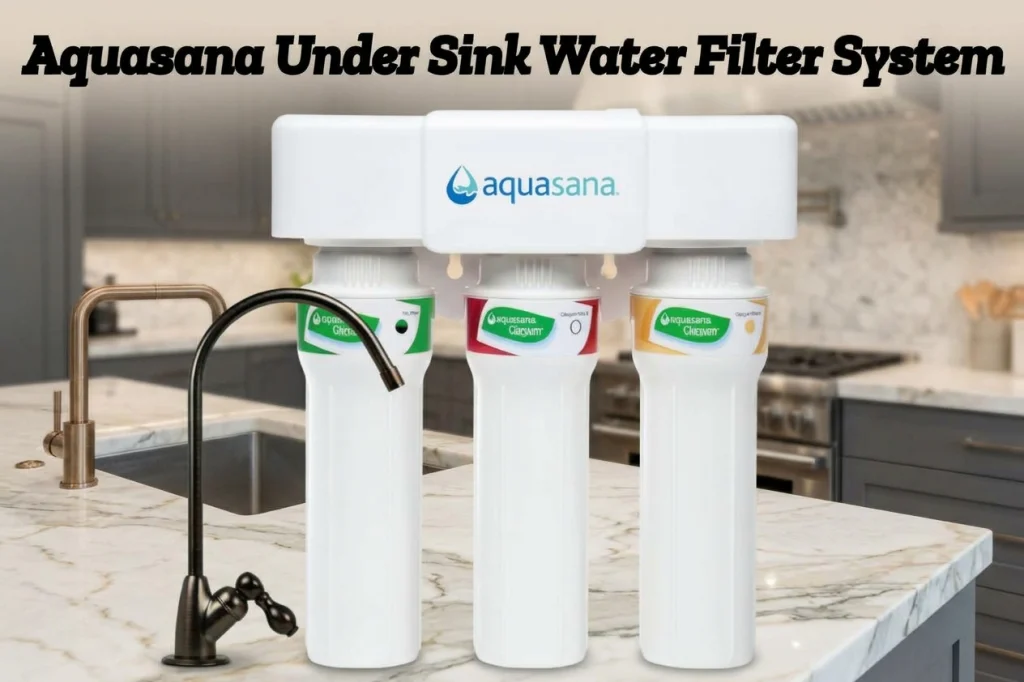
Image source: Amazon
The Aquasana under sink water filter system is worth considering if you want to reduce a range of common tap-water contaminants without using reverse osmosis. Its Claryum filtration technology is designed to reduce contaminants such as lead, PFAS, chlorine, and pesticides while retaining beneficial minerals found naturally in water.
Aquasana offers several under sink models, so it is important to check the exact version before purchasing. The specifications below relate to the Claryum system described for this comparison, rather than every Aquasana product.
Key Features
- Designed to reduce up to 99% of 78 contaminants, depending on the model and certified claim.
- Targets chlorine, lead, PFOA, PFOS, pesticides, and other listed contaminants.
- Retains beneficial minerals.
- Delivers water at a stated flow rate of approximately 0.5 gallons per minute for the specified system.
- Filter life of up to six months or 800 gallons for the supplied configuration.
- Twist-off filter housing allows cartridge replacement without disconnecting the water lines.
- Includes the initial filters and required installation parts for the specified model.
Filtration Performance and Water Taste
One reason to consider Aquasana is its focus on reducing specific contaminants while retaining minerals. Its Claryum technology uses multiple filtration methods to address substances that can affect water quality and taste.
That makes it a practical option for households that want filtered water for drinking, making coffee, preparing meals, and filling reusable bottles. The actual taste improvement will depend on the incoming water and the particular contaminants present.
There is one important limitation: the standard Aquasana Claryum system described here does not reduce TDS in the way a reverse osmosis system does. If your goal is to lower dissolved salts or fluoride, check the contaminant claims for the exact model or consider an RO system instead.
Installation and Filter Replacement
The specified configuration includes the initial filter set and installation hardware. It requires approximately 15.85 inches of under-sink space, plus enough clearance to access the housing and replace the filters.
The twist-off housing is useful because replacement does not require disconnecting the hoses or water lines. The stated service interval is six months or 800 gallons, whichever comes first, so households with higher water use may need to plan for more frequent replacement.
Before buying, measure the available space and check the included fittings against your existing plumbing. Do not assume every Aquasana model uses the same dimensions or connections.
Pros and Cons
Pros
- Targets a broad range of contaminants while retaining minerals.
- Convenient twist-off filter replacement.
- No RO storage tank is required for the specified configuration.
- Suitable for everyday drinking and cooking needs when its certified claims match your water concerns.
Cons
- Does not reduce TDS like a reverse osmosis system.
- Replacement filters add an ongoing cost.
- Installation space and fittings need to be checked.
- The exact filtration claims depend on the model.
Who Should Buy the Aquasana Under Sink Water Filter?
Aquasana is a sensible choice for someone who wants to improve tap-water quality without adding a reverse osmosis system. It may suit homeowners who prefer mineral retention, a relatively straightforward filter replacement process, and a dedicated under sink filtration setup.
It is less suitable for buyers whose main goal is TDS reduction. In that case, the iSpring RCC7AK-BN, APEC RO-Hi, or Eiree C6 may be a better fit, provided the selected model meets the household’s filtration requirements.
Check price and availability:
Amazon — Check Price Aquasana Under Sink Water Filter
AliExpress — Check Price Aquasana product link
#4. Waterdrop TST-UF — Best Under Sink Water Filter for Fast Flow
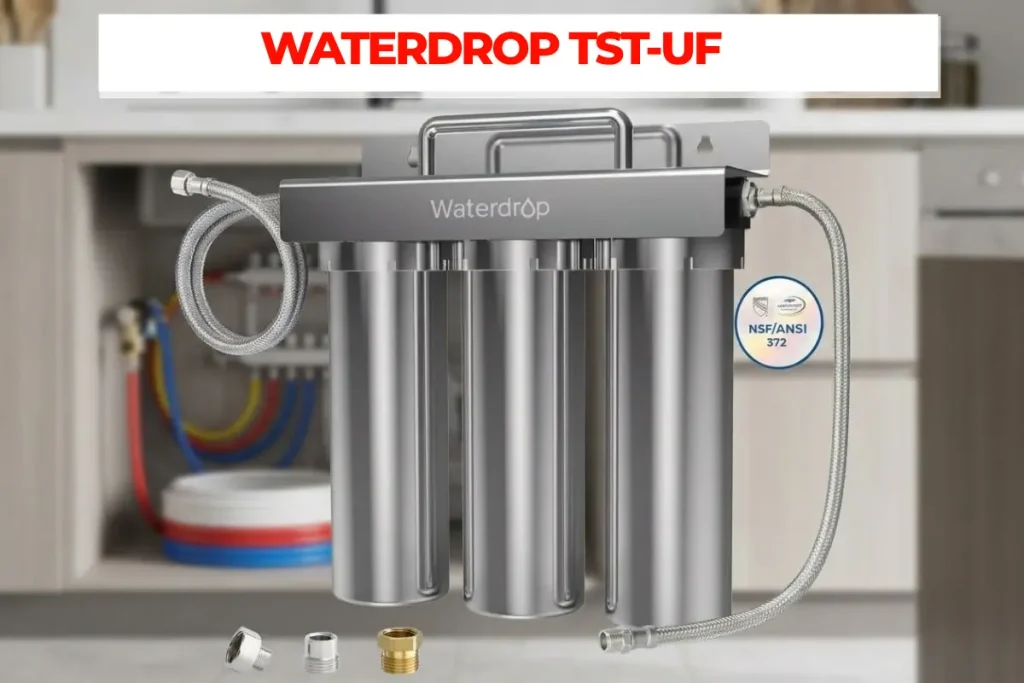
Image Soucre: Amazon
The Waterdrop TST-UF is designed for households that want an under sink water filtration system with a steady flow and no reverse osmosis stage. Its three-stage design focuses on reducing selected impurities while retaining beneficial minerals.
According to the supplied specifications, the system is intended for standard municipal tap water. It is not suitable for hot water or well water, so check your water source before ordering.
Key Features
- Three-stage under sink filtration.
- Ultrafiltration membrane with a stated ability to reduce impurities larger than 0.01 microns.
- Advertised flow rate of up to 1.59 gallons per minute.
- Compatible with many standard 3/8-inch and 1/2-inch connections, depending on the fitting.
- Does not reduce TDS.
- Separate replacement intervals for the PP, UF, and CT filters.
- No additional faucet included.
Water Flow and Filtration
The main selling point of the Waterdrop TST-UF is its advertised water flow rate. At up to 1.59 GPM, it is designed to provide filtered water quickly, which can be useful when filling a drinking glass, washing produce, or preparing food.
Its ultrafiltration membrane is intended to reduce selected particles and impurities, while the other filter stages address substances such as chlorine, heavy metals, and unwanted odors according to the manufacturer’s claims.
However, ultrafiltration is not the same as reverse osmosis. The Waterdrop TST-UF does not reduce TDS, and its listed filtration features should not be interpreted as proof that it removes every dissolved contaminant. Check the exact performance data for any specific substance you are concerned about.
Installation and Filter Life
Waterdrop designed this model to connect to compatible cold-water plumbing. Most users should check whether their existing connection uses the required thread type before starting installation. If your faucet uses a quick-connect fitting, an additional adapter may be necessary.
The supplied specifications list these approximate replacement intervals:
- PP filter: 6–8 months.
- UF filter: about 12 months.
- CT filter: 12–24 months.
Actual replacement timing depends on incoming water quality and how much water the household uses. Replacement cartridges are available under model-specific product codes, so verify compatibility rather than buying a filter based on appearance alone.
Pros and Cons
Pros
- High advertised flow rate.
- Three-stage filtration in a compact under sink setup.
- Retains beneficial minerals.
- Different filter stages have relatively long stated service intervals.
- Designed for compatible municipal-water connections.
Cons
- Does not reduce TDS.
- Not intended for hot water or well water.
- A separate faucet is not included.
- Adapter requirements depend on the existing plumbing.
Who Should Buy the Waterdrop TST-UF?
The Waterdrop TST-UF may suit a household that receives treated municipal water and mainly wants better taste, odor control, and convenient filtered water at the sink. Its high stated flow rate is useful for busy kitchens where people fill bottles and prepare meals throughout the day.
It is not the right pick for everyone. If your water test shows a need to reduce dissolved salts, fluoride, or other substances that this model is not verified to reduce, choose a filtration system with appropriate tested claims. People using private wells should look for a system specifically suited to their water conditions.
Check price and availability:
Amazon — Check Price Waterdrop TST-UF
AliExpress — Check Price Waterdrop TST-UF
#3. APEC Water RO-Hi, 5-Stage Under Sink — Best Tank-Based RO System
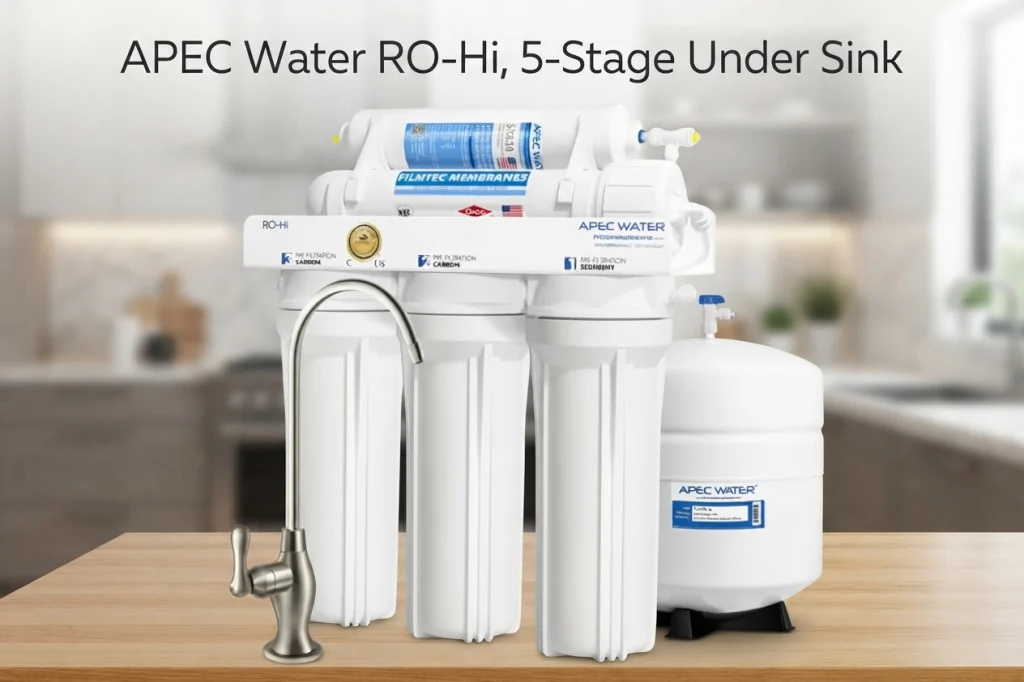
Image Source: Amazon
The APEC Water RO-Hi is a five-stage reverse osmosis water filtration system designed for people who want to reduce a broad range of contaminants at home. It uses a storage tank and a separate drinking-water faucet, so it needs more under-sink space than a compact tankless system.
APEC lists the RO-Hi as a 90-gallon-per-day system and describes it as a high-output model with US-made filters and a fast-flow outlet design. The manufacturer also lists WQA certification for the system. You can review its published specifications on the official APEC RO-Hi product page.
Key Features
- Five-stage reverse osmosis filtration.
- Rated output of up to 90 gallons per day under specified test conditions.
- Designed to reduce contaminants including lead, fluoride, arsenic, chlorine, and certain PFAS compounds.
- 3/8-inch output design for faster dispensing from the storage tank.
- Includes a separate lead-free drinking-water faucet and a four-gallon storage tank.
- Uses quick-connect fittings and food-grade tubing.
- Manufacturer-listed WQA certification and lifetime technical support.
What Makes the APEC RO-Hi Worth Considering?
Reverse osmosis can reduce dissolved substances that ordinary carbon filtration may leave behind. The RO-Hi combines sediment and carbon filtration with an RO membrane and a final polishing filter. The manufacturer lists a wide range of contaminant-reduction claims, but the specific claim for each substance should be checked against the applicable certification or performance data.
This makes the RO-Hi a candidate for households that want more extensive filtration than a standard under sink carbon filter provides. It can also be useful for drinking water, coffee, tea, and cooking.
Its high-output design is another consideration. The manufacturer says the 3/8-inch outlet helps fill glasses and pitchers faster than a smaller outlet design. Actual dispensing speed still depends on water pressure, tank pressure, filter condition, and other installation factors.
Storage Tank, Space, and Maintenance
Unlike the Eiree C6, the APEC RO-Hi uses a pressurized storage tank. That tank holds filtered water for dispensing, but it takes up additional room beneath the sink.
The listed system dimensions are approximately 16 inches wide, 5.25 inches deep, and 17.5 inches high. The included four-gallon tank measures approximately 11 × 11 × 15 inches. Measure both the filtration unit and the tank before purchasing, and allow enough space for tubing and maintenance.
The system uses standard-style connections and includes installation components. Even so, fitting an RO system requires connecting the feed-water line, drain connection, storage tank, and dedicated faucet. If you are not comfortable working with plumbing, professional installation may be worth the cost.
Pros and Cons
Pros
- Five-stage reverse osmosis filtration.
- Designed to reduce TDS and a broad range of listed contaminants.
- High-output design with a dedicated faucet.
- Includes a storage tank and installation parts.
- Manufacturer-listed WQA certification and technical support.
Cons
- The storage tank uses under-sink space.
- Installation is more involved than replacing a simple inline filter.
- Replacement filters and membrane add ongoing costs.
- Actual output and performance depend on installation and operating conditions.
Who Should Buy the APEC Water RO-Hi?
The APEC RO-Hi is a reasonable option for households that prefer a conventional reverse osmosis system with a storage tank and dedicated faucet. It may suit families who regularly fill large pitchers or use filtered water for cooking and beverages.
It is less appealing if your cabinet is crowded or you want to avoid a separate tank. A tankless model such as the Eiree C6 may fit that preference better, although its stated performance and certification details should be checked before purchase.
Check price and availability:
Amazon — Check Price APEC Water RO-Hi
AliExpress — Check Price APEC Water RO-Hi
#2. iSpring RCC7AK-BN NSF Certified — Best RO System With Mineral Enhancement
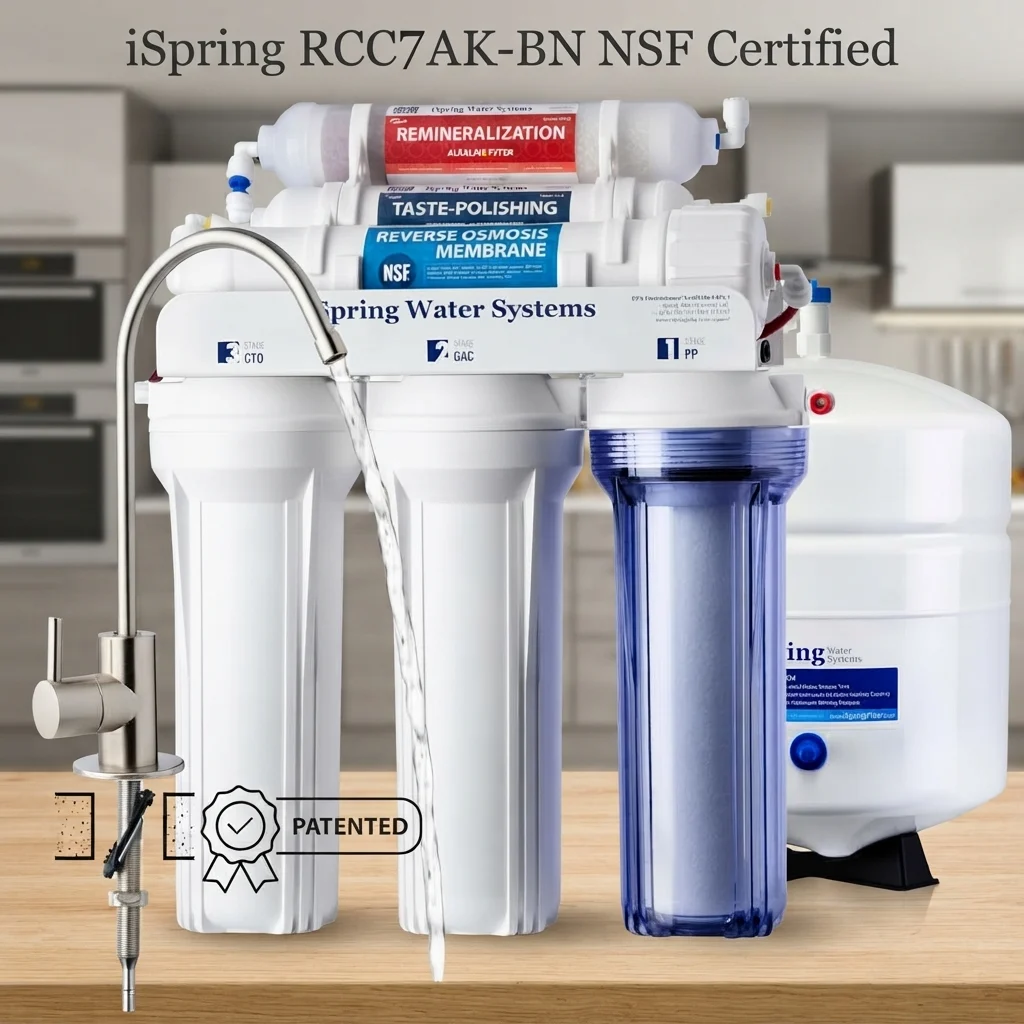
Image Source: Amazon
The iSpring RCC7AK-BN combines reverse osmosis filtration with an additional mineral-enhancement stage. It is designed for buyers who want to reduce dissolved contaminants and then add minerals back into the filtered water.
The system’s listed features include a top-mounted installation fastener, a transparent first-stage filter housing, and replacement-filter options covering different service intervals. iSpring also lists technical support based in Atlanta, Georgia.
Key Features
- Reverse osmosis filtration with a mineral-enhancement stage.
- NSF/ANSI 58 certification listed for the RCC7AK system.
- Manufacturer-listed reduction claims for TDS, PFAS, chlorine, lead, fluoride, and other substances.
- Top-mounted fastener designed to make countertop faucet installation easier.
- Transparent first-stage housing for checking sediment buildup.
- Quick-connect fittings and step-by-step installation instructions.
- Replacement filter sets for different maintenance schedules.
Filtration and Mineral Enhancement
The iSpring RCC7AK-BN is worth considering if you want an RO system with a mineral stage. Reverse osmosis reduces dissolved substances, including many minerals that contribute to TDS. The additional AK stage is designed to add selected minerals back into the filtered water.
Some buyers prefer this approach because they want the filtration benefits of RO without drinking water that has gone through the membrane alone. However, a higher pH or added minerals should not automatically be taken as proof of better health. Water quality depends on the contaminants present, the system’s verified performance, and the needs of the household.
The product information supplied for this model lists reduction claims for substances such as lead, fluoride, PFAS, and TDS. Those percentages should be checked against the current certification record and test conditions before making a purchase decision.
Installation and Filter Replacement
The top-mounted fastener is intended to make installation of the dedicated faucet easier because the main fastening step can be completed from above the sink. The clear first-stage housing is also useful for checking whether sediment is collecting, although visual inspection does not replace following the recommended filter schedule.
The manufacturer lists several replacement-filter sets, including six-month, one-year, two-year, and three-year options. These intervals apply to different filter sets and should not be treated as one universal replacement schedule for every cartridge.
Before buying replacement filters, confirm that they match the exact RCC7AK model and your system’s revision. A compatible replacement set helps maintain the system’s intended performance.
Pros and Cons
Pros
- Reverse osmosis filtration with an added mineral stage.
- Designed to reduce TDS and multiple listed contaminants.
- Top-mounted faucet fastener may simplify one part of installation.
- Transparent first-stage housing helps you inspect sediment buildup.
- Replacement-filter options are available for different intervals.
Cons
- Requires room for the filtration unit, tubing, and storage tank.
- Installation involves several plumbing connections.
- Filter and membrane replacement costs should be included in the budget.
- The mineral stage does not remove the need to verify contaminant-reduction claims.
Who Should Buy the iSpring RCC7AK-BN?
The iSpring RCC7AK-BN is a good candidate for homeowners who want an established-style, tank-based RO setup with a mineral-enhancement stage. It makes sense if reducing TDS is a priority and you also prefer a final stage designed to add selected minerals back to the water.
It may be less convenient for someone who has very limited cabinet space or wants a tankless unit with an integrated filter-life indicator. For those buyers, the Eiree C6 is worth comparing. Before choosing either model, confirm the exact certification listing, replacement-filter prices, and installation dimensions.
Check price and availability:
Amazon — Check Price iSpring RCC7AK-BN
AliExpress — Check Price iSpring RCC7AK-BN
#1. Eiree C6 Tankless Reverse Osmosis System — Best Tankless Option on Paper
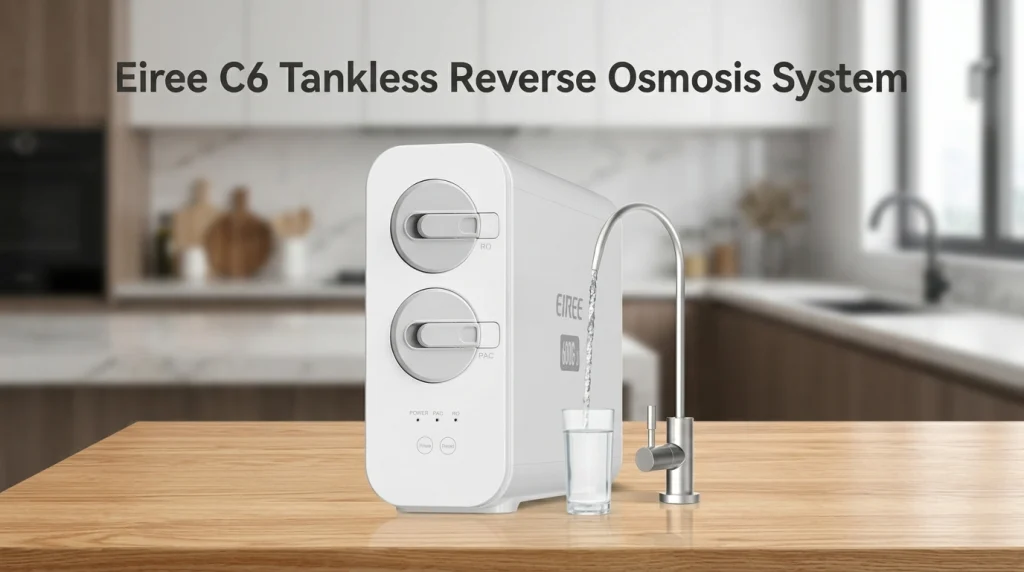
Image Source: Amazon
The Eiree C6 Tankless Reverse Osmosis System takes the top position in this comparison because its advertised feature set combines reverse osmosis filtration, a compact design, quick filter replacement, and a relatively low stated wastewater ratio.
It is designed for buyers who want an under sink RO system without a separate storage tank. The supplied specifications list six filtration stages, a 600 GPD capacity rating, a smart filter indicator, and an automatic flushing function.
These are manufacturer-provided claims, so they should be verified against current documentation before purchase. In particular, check the exact model’s independent certification records and contaminant-specific performance data rather than relying on a broad claim that it removes more than 1,000 contaminants.
Key Features
- Six-stage reverse osmosis filtration.
- Advertised NSF/ANSI 42, 53, and 372 certifications.
- Stated 600 GPD capacity and approximately 0.53 GPM flow rate.
- Advertised 2:1 pure-water-to-drain-water ratio.
- Tankless design measuring approximately 17.91 × 5.91 × 14.57 inches.
- Twist-and-lock filter replacement.
- Red indicator light for filter replacement.
- Automatic flushing function.
- Stated PAC filter life of 6–12 months and RO filter life of 12–24 months, depending on use.
Reverse Osmosis Filtration and Contaminant Reduction
The Eiree C6 is designed to reduce TDS and a range of substances that may be present in drinking water, including lead, fluoride, PFAS, arsenic, and other listed contaminants. Its stated 0.0001-micron filtration figure refers to the manufacturer’s description of its RO filtration, but pore size alone does not establish the complete performance of a water treatment system.
The important question is whether the exact model has independent test results supporting the claims that matter to you. NSF/ANSI standards cover different aspects of water treatment and product safety, and a claim of certification should be confirmed through the relevant certification body’s listing.
If the applicable claims are verified, this type of system can be useful for a household that wants to reduce dissolved contaminants and have filtered water ready at the kitchen sink. It may also help reduce reliance on bottled drinking water, depending on household habits.
Tankless Design and Water Flow
The compact design is one of the main reasons to consider the C6. Traditional RO systems often use a separate storage tank, which takes up room beneath the sink. A tankless model avoids that separate tank, although the unit still needs enough space for plumbing connections, the drain line, and filter changes.
The supplied specification lists a flow rate of 0.53 gallons per minute. At that rate, filling an eight-ounce cup should take around eight seconds under suitable operating conditions. Actual flow can vary with incoming water pressure, temperature, filter condition, and installation.
The stated 2:1 pure-to-drain ratio is another point worth checking. It describes the manufacturer’s advertised water-use performance, not a guarantee that every home will achieve the same ratio. Feed-water conditions and operating settings can affect wastewater output.
Filter Replacement and Everyday Maintenance
The twist-and-lock cartridge design is intended to make filter changes easier without a complicated replacement process. A red indicator light is designed to signal when a filter needs attention, while the automatic flushing function helps maintain the system according to its operating design.
The stated filter intervals are six to twelve months for the PAC filter and twelve to twenty-four months for the RO filter. These are estimates, not fixed guarantees. Water quality and daily use can shorten or extend the replacement interval.
Before ordering, check the cost and availability of replacement cartridges in the United States. A low initial price can become less attractive if compatible filters are difficult to find or expensive to replace.
Pros and Cons
Pros
- Tankless design saves the space otherwise needed for a separate storage tank.
- Reverse osmosis filtration is designed to reduce TDS and selected dissolved contaminants.
- Advertised 600 GPD capacity and a 0.53 GPM flow rate.
- Stated 2:1 pure-to-drain ratio.
- Twist-and-lock filter replacement and a filter-life indicator.
- Automatic flushing function.
Cons
- Independent certification and performance claims need to be confirmed for the exact model.
- Requires electricity if the system’s operating design uses powered components; verify its power requirements before installation.
- Replacement-filter costs and US availability should be checked.
- Actual flow and wastewater performance depend on water pressure and other conditions.
- Installation still requires suitable water and drain connections.
Who Should Buy the Eiree C6?
The Eiree C6 may be a good fit for a household that wants RO filtration but does not want to give up cabinet space for a separate storage tank. Its advertised flow rate and filter indicator may also appeal to families who use filtered water throughout the day and want a clear reminder when maintenance is due.
There are two reasons to pause before ordering. First, verify the model’s exact NSF certification records and the contaminant-reduction claims relevant to your water. Second, confirm that replacement filters are available at a reasonable cost. Those checks matter more than the number of stages listed on the box.
If the product’s claims are independently supported and the installation fits your kitchen, the Eiree C6 offers a useful combination of compact design and RO filtration. If those details cannot be confirmed, the iSpring RCC7AK-BN or APEC RO-Hi may be easier to assess through their published product information and certification records.
Check price and availability:
Amazon — Eiree C6 Tankless Reverse Osmosis System
AliExpress — Eiree C6 Tankless Reverse Osmosis System
Which Under Sink Water Filter System Wins?
Choosing a winner depends on what you need to remove from your water, how much space you have under the sink, and how much maintenance you are comfortable handling. The top-ranked model is not automatically the best choice for every home.
Best Overall on Paper: Eiree C6 Tankless Reverse Osmosis System
The Eiree C6 takes the top spot for its advertised combination of tankless construction, RO filtration, filter-life indicator, and automatic flushing. Its compact form may suit kitchens where a traditional RO storage tank would be difficult to fit.
That said, this is a specifications-based pick, not a hands-on test winner. The decision depends on confirming the claimed certifications, the contaminant-reduction data, and the cost of replacement cartridges. If any of those details are unclear, compare it carefully with the iSpring and APEC alternatives before spending your money.
Best for Mineral Enhancement: iSpring RCC7AK-BN
The iSpring RCC7AK-BN is the more suitable choice for buyers who want reverse osmosis filtration with a mineral-enhancement stage. It is a traditional under sink setup, so you need to make room for the tank and plumbing. Its listed NSF/ANSI 58 certification is also a useful starting point when checking the system’s performance claims.
For a household that values TDS reduction and prefers the idea of adding selected minerals back after RO filtration, this model deserves a close look. Remember that the added minerals do not replace the need to test your water or verify the system’s contaminant-reduction performance.
Best Traditional Tank-Based Option: APEC Water RO-Hi
The APEC RO-Hi is worth considering if you prefer a conventional system with a storage tank, a dedicated faucet, and a high-output design. Its published specifications and WQA listing give buyers information to review before installation.
It is less convenient for a very crowded cabinet, but the included tank can provide stored filtered water for dispensing. If you choose this model, budget for filter replacements and make sure the tank and filtration unit both fit beneath your sink.
Best for Fast Flow Without TDS Reduction: Waterdrop TST-UF
The Waterdrop TST-UF is the better match for people who want a fast-flowing, three-stage filter for suitable municipal tap water and do not need TDS reduction. It also retains beneficial minerals and avoids the additional RO stage.
Its limitations are important. It is not intended for well water or hot water, and it should not be treated as equivalent to a reverse osmosis system. Check its verified performance against the specific contaminants in your water before choosing it.
Best for Retaining Minerals With Broad Filtration: Aquasana
Aquasana’s specified Claryum system is a strong option for households that want to reduce a range of contaminants while retaining naturally occurring minerals. Its twist-off housing makes filter replacement more straightforward, and the stated six-month or 800-gallon interval provides a useful maintenance guideline.
The main limitation is that the standard Claryum model described here does not reduce TDS like RO filtration. Buyers who need TDS reduction should compare it with the RO systems instead.
Final Verdict
For a compact tankless RO setup, the Eiree C6 is the leading option in this specifications-based comparison, provided its certification claims and replacement-filter supply check out. For mineral enhancement, the iSpring RCC7AK-BN is the stronger match. The APEC RO-Hi suits buyers who prefer a traditional tank-based system, while Waterdrop and Aquasana are worth considering when TDS reduction is not the main goal.
Before buying any of these systems, test your water or review a reliable water-quality report, identify the contaminants you need to address, and check the exact model’s independent certifications. This is the most useful way to choose a filter that fits your household rather than paying for features you may not need.
What to Check Before Buying an Under Sink Water Filter
- Know What Is in Your Water
If your home receives municipal water, start with the local water utility’s Consumer Confidence Report. If you use a private well, arrange suitable water testing. A filter should be selected based on the substances actually present and the system’s verified ability to reduce them.
- Check the Exact Certification
Look for independent certification and the specific standard relevant to your concern. For example, NSF/ANSI 42 generally relates to aesthetic effects such as chlorine taste and odor, while NSF/ANSI 53 covers specified health-related contaminant reduction claims. NSF/ANSI 58 applies to reverse osmosis drinking-water treatment systems, and NSF/ANSI 372 concerns lead content in drinking-water system components.
A standard number alone does not prove that a system reduces every contaminant. Confirm the exact model and the claims listed by the certifying organization.
- Compare Replacement Filter Costs
Do not judge a water filter by its purchase price alone. Check the cost of each compatible cartridge, how often it needs replacement, and whether you can easily buy it in the US. A system with a lower initial price may cost more to maintain over several years.
- Measure the Cabinet
Measure the width, depth, and height available beneath your sink. Include the space needed for a tank, tubing, electrical connections if required, and access to the filter housing. Also check whether the system includes a faucet or requires you to buy one separately.
- Understand TDS Reduction
TDS measures the combined concentration of dissolved substances in water. A lower TDS reading does not, by itself, prove that water is safe, and a higher reading does not identify which substances are present. Use appropriate testing and contaminant-specific filtration claims when choosing a system.
- Consider Water Waste and Flow
Reverse osmosis systems send some incoming water to the drain during filtration. Compare the manufacturer’s stated pure-water-to-drain ratio and rated flow, but remember that actual results depend on water pressure, temperature, and other conditions.
- Confirm Installation Requirements
Some systems connect to an existing cold-water line, while others need a separate faucet, drain connection, tank, adapter, or power outlet. Read the installation instructions before ordering. If your plumbing does not match the listed fittings, contact the manufacturer or a qualified installer.
Frequently Asked Questions
What is the best under sink water filter system in 2026?
In this comparison, the Eiree C6 is the leading tankless RO option on paper, while the iSpring RCC7AK-BN is a strong alternative for buyers who want a mineral-enhancement stage. The best choice depends on your water quality, installation space, maintenance budget, and verified filtration performance.
Is reverse osmosis better than a regular under sink water filter?
Reverse osmosis can reduce many dissolved substances that ordinary carbon filters may not remove. However, a well-matched carbon or ultrafiltration system can be a suitable option when your main goals are reducing chlorine taste, odor, or specific particles. The right choice depends on your water test and the contaminant-reduction claims verified for the model.
Do under sink water filters remove PFAS?
Some under sink filters have independently tested claims for reducing particular PFAS compounds, including PFOA and PFOS. The results vary by model. Check the exact product’s certification and performance data rather than assuming that every under sink filter removes PFAS.
Do under sink water filters reduce TDS?
It depends on the filtration method. Reverse osmosis systems such as the iSpring RCC7AK-BN and APEC RO-Hi are designed to reduce TDS. The Waterdrop TST-UF and the standard Aquasana Claryum configuration described in this article do not reduce TDS in the same way.
How often should under sink water filters be replaced?
Replacement intervals vary by model and cartridge. The Aquasana configuration described here lists up to six months or 800 gallons. Waterdrop lists different intervals for its three filter stages, while the Eiree C6 has separate stated intervals for its PAC and RO filters. Follow the exact model’s manual and replacement indicators.
Can I install an under sink water filter myself?
Some systems are designed for DIY installation, but the difficulty depends on your plumbing, available connections, and the type of system. Reverse osmosis systems usually involve more connections than a simple inline filter. If you are unsure about connecting the drain line or preventing leaks, consider hiring a plumber.
Are tankless reverse osmosis systems worth buying?
A tankless RO system can save space and provide filtered water without a separate storage tank. Before buying, compare its rated flow, electrical requirements, replacement-filter costs, and verified performance with those of a traditional tank-based system.
Is filtered water safe to drink?
A filter can reduce specific contaminants when it is correctly installed and maintained, but no single filter removes everything. Start with a reliable water-quality report or suitable testing, choose a system certified for the contaminants you need to reduce, and replace cartridges on schedule.
Final Thoughts
The best under sink water filter is the one that addresses your water-quality concerns and fits your kitchen, budget, and maintenance routine.
The Eiree C6 is worth investigating if you want a compact tankless RO system. The iSpring RCC7AK-BN offers a mineral-enhancement stage, and the APEC RO-Hi provides a traditional tank-based setup. Waterdrop and Aquasana are alternatives for households that want filtration without the same TDS-reduction approach.
Compare the exact product specifications, verified certification claims, and replacement-filter prices before making your final decision.
Ready to compare more products and save on your next purchase? Visit our website for more buying guides, product reviews, and available coupon information.
Affiliate disclosure: This article may contain affiliate links. If you buy through a qualifying link, we may earn a commission at no extra cost to you. Product specifications, prices, availability, and certification status can change, so confirm the details with the manufacturer or seller before purchasing.