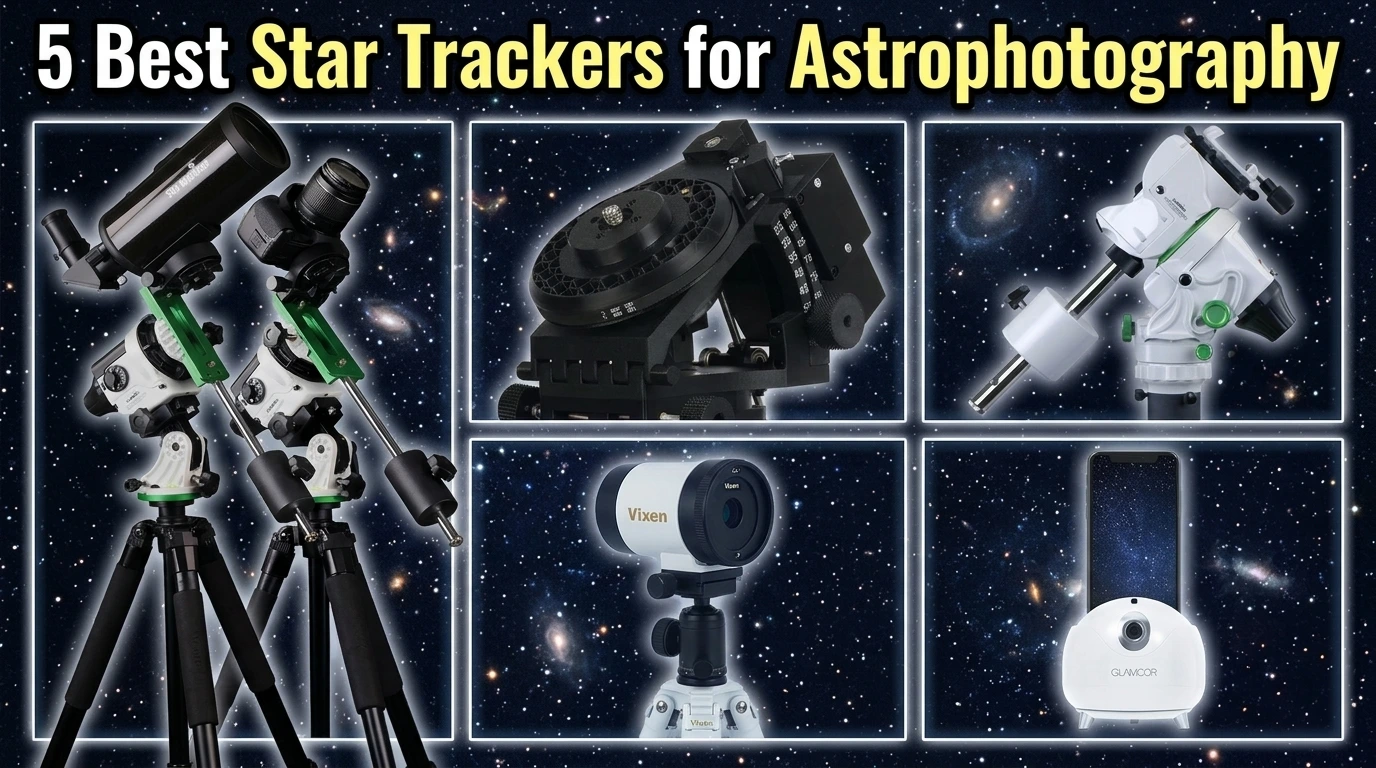
The best star trackers for astrophotography help photographers capture sharper stars, detailed Milky Way images, and deep-sky objects by compensating for Earth’s rotation during long exposures. Whether you’re a beginner using a DSLR or an experienced photographer working with a telescope, the right star tracking mount can make a noticeable difference in your night-sky photos.
Choosing a tracker depends on your camera setup, the weight of your equipment, your budget, and the type of celestial objects you want to photograph. Some mounts are small enough to carry on a hiking trip, while others offer GoTo controls and higher payload capacities for more advanced imaging.
In this guide, we’ll compare five products, explain what each one offers, and help you decide which option fits your astrophotography setup.
Quick Comparison: Best Star Trackers for Astrophotography
| Product | Best For | Main Feature | Amazon | AliExpress |
| 5. Sky-Watcher Star Adventurer 2i Pro Pack | Wide-field night photography | Wi-Fi and smartphone control | Check Price Amazon | Check Price AliExpress |
| 4. OGST Single-Axis Automatic Tracking Equatorial Mount | Lightweight portable imaging | 4 kg payload capacity | Check Price Amazon | Check Price AliExpress |
| 3. Sky-Watcher Star Adventurer GTi Mount | Advanced astrophotography | GoTo tracking and 11 lb payload | Check Price Amazon | Check Price AliExpress |
| 2. TeSeek Equatorial Mount Star Tracker | Budget-conscious experimentation | Open-source control and USB-C power | Check Price Amazon | Check Price AliExpress |
| 1. GLAMCOR Star Tracker | Smartphone video recording | AI face tracking | Check Price Amazon | Check Price AliExpress |
Affiliate disclosure: This article may contain affiliate links. If you buy through one of these links, we may earn a commission at no extra cost to you.
Important: The GLAMCOR Star Tracker is a phone-tracking gimbal for video creation, not an astronomical star tracker. It is included because it was one of the five products supplied for this comparison, but it is not suitable for tracking celestial objects during long exposures. The Sky-Watcher Star Adventurer GTi is the strongest overall astrophotography choice among the products listed here.
5. Sky-Watcher Star Adventurer 2i Pro Pack – Best Portable Star Tracker for Wide-Field Astrophotography
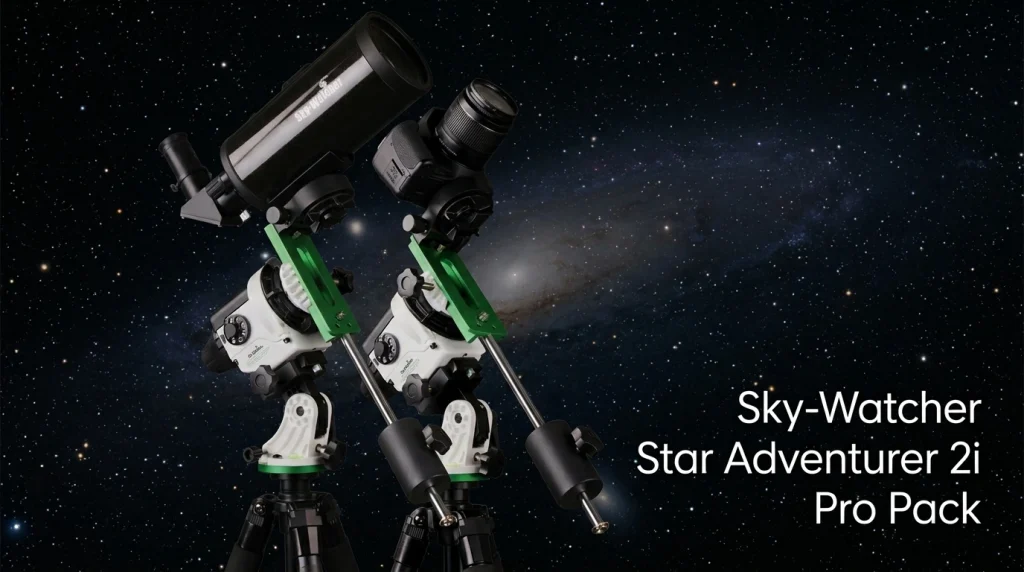
Image Source: Amazon
The Sky-Watcher Star Adventurer 2i Pro Pack is designed for photographers who want to capture the night sky without carrying a large equatorial telescope mount. Its compact design makes it worth considering for Milky Way photography, wide-field celestial images, and time-lapse projects.
Unlike a standard camera tripod, this motorized tracking platform follows the apparent movement of the sky. That allows photographers to use longer exposures while reducing the star trails that appear when the camera remains stationary.
Key Features
- Motorized tracking for wide-field astrophotography.
- Wi-Fi connectivity and smartphone control through the free SAM Console app.
- Compatibility with photographic tripods.
- An equatorial base that helps with polar alignment.
- Support for nightscape photography, time-lapse video, and compatible telescope setups.
Performance and Practical Use
One reason to consider the Star Adventurer 2i is its portable design. You can build a relatively lightweight setup around a camera and lens instead of transporting a full-size telescope mount. This is useful when traveling to dark-sky locations in the United States, including rural areas where light pollution is lower.
The smartphone control feature also gives you another way to manage the mount. However, Wi-Fi control does not remove the need to align the tracker properly. Polar alignment, balanced equipment, a stable tripod, and suitable exposure settings still matter when you’re trying to capture sharp stars.
The Pro Pack includes an equatorial base, but you should check the exact package contents before purchasing. Accessories and bundle configurations can vary by listing.
What Could Be Better?
The Star Adventurer 2i is intended mainly for portable, wide-field imaging. Photographers planning to use heavier telescopes or wanting automated GoTo object finding may prefer a more capable mount.
You’ll also need to learn how to polar-align the tracker. A tracking mount can reduce star movement, but it cannot compensate for every setup error or eliminate the effects of poor focus and vibration.
Who Should Buy It?
Consider the Sky-Watcher Star Adventurer 2i Pro Pack if you want a portable star tracker for Milky Way photography, nightscapes, and wide-field images with a DSLR or mirrorless camera.
Check the current price and package contents:
Amazon: Check Price Amazon
AliExpress: Check Price AliExpress
4. OGST Single-Axis Automatic Tracking Equatorial Mount – Best Lightweight Star Tracker for Travel
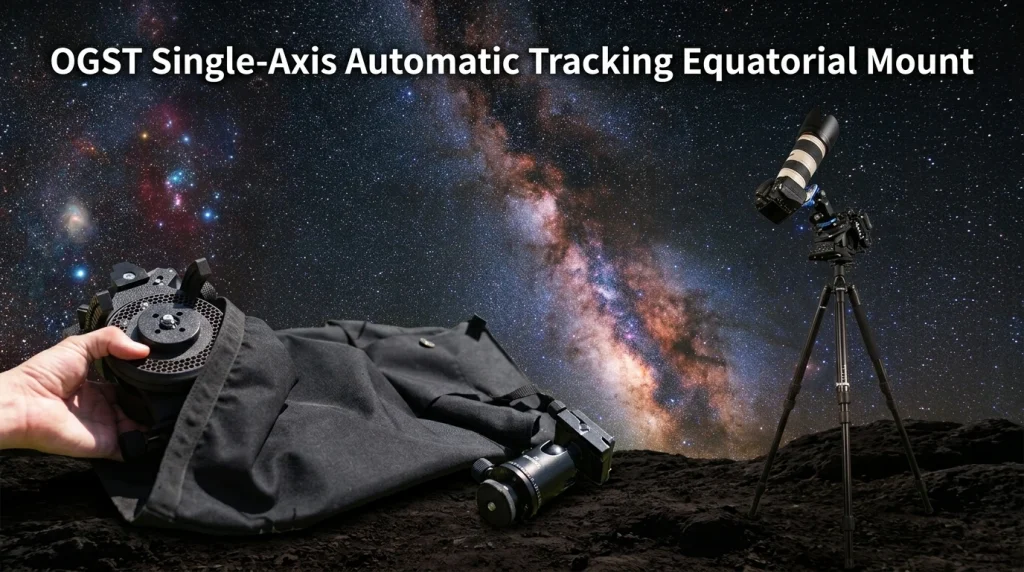
image source: Amazon
The OGST Single-Axis Automatic Tracking Equatorial Mount is aimed at photographers who want a compact tracking system without carrying a heavy mount. Its advertised carbon-composite construction and open-source control system make it an interesting option for people who enjoy building and customizing their astrophotography setups.
According to the supplied specifications, the mount weighs approximately 1.4 kg (3.1 lb) and supports equipment weighing up to 4 kg (8.8 lb).
Key Features
- Advertised tracking accuracy of ±10 arcseconds of periodic error over 10 minutes.
- Maximum payload of 4 kg.
- Lightweight ABS and carbon-composite construction.
- Travel Mode and Fixed Mode.
- Wi-Fi control through a browser or supported app.
- Three polar-alignment options, including an optical polar scope and smartphone-assisted alignment.
Performance and Practical Use
Portability is the main reason to look at the OGST mount. A lighter tracking system can be easier to carry to a remote observing site, particularly if your setup includes a camera, lens, and a few small accessories.
The advertised tracking accuracy is another point worth examining. The manufacturer-provided specification claims ±10 arcseconds of periodic error over 10 minutes. However, periodic error is only one factor affecting image quality. Actual results also depend on polar alignment, focal length, payload balance, mechanical stability, and exposure time.
The 4 kg payload limit gives you a useful starting point when planning a camera setup. Before buying, add the weight of your camera, lens, mounting plate, cables, and other accessories to make sure the complete rig stays within the limit.
The open-source Wi-Fi system may appeal to users who want more control over their equipment. At the same time, buyers should confirm the current documentation, software compatibility, support options, and included accessories before placing an order.
What Could Be Better?
This mount may require more research and setup than a familiar, established tracking system. The advertised accuracy should not be interpreted as a guarantee that every camera will produce pinpoint stars at a particular exposure length.
The available specifications also do not establish long-term reliability or performance under every imaging condition.
Who Should Buy It?
The OGST is worth investigating if you prioritize low weight, customizable controls, and a compact setup for wide-field astrophotography.
It is a less straightforward choice for someone who wants a widely documented system with an established support network.
Check availability and the latest specifications:
Amazon: Check Price Amazon
AliExpress: Check Price AliExpress
Looking for Astrophotography Deals and Coupons?
Before buying a tracking mount, compare the total cost of the mount, counterweights, power supply, tripod, and any required adapters. A cheaper listing may not include everything you need.
You can also check our website for current promotions and product discounts.
Explore our latest deals: Promowelt.com
3. Sky-Watcher Star Adventurer GTi Mount – Best Overall Star Tracker for Astrophotography
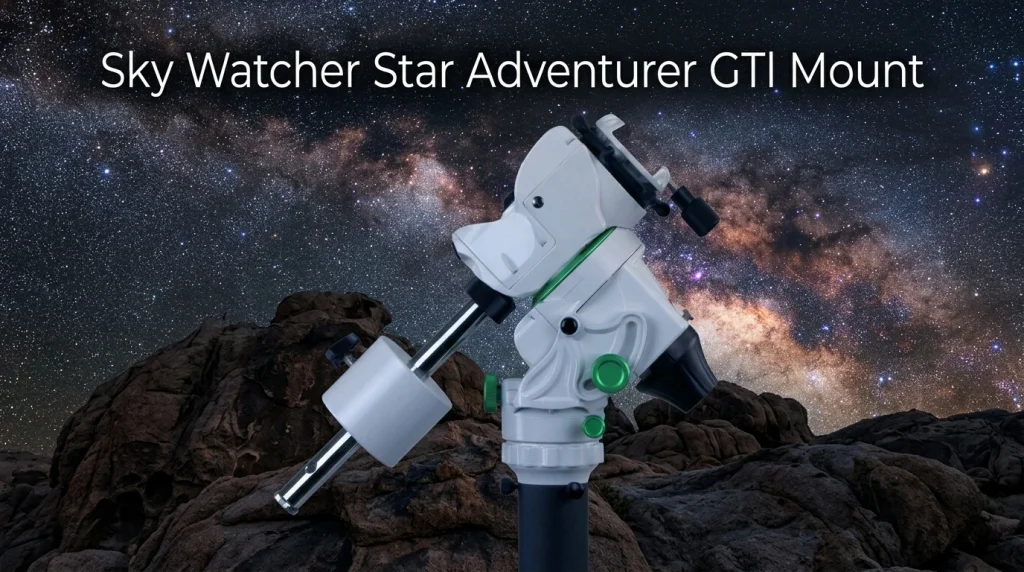
Image Source: Amazon
The Sky-Watcher Star Adventurer GTi is the most capable all-around astrophotography option in this list for photographers who want automated object finding and a higher payload capacity than a basic portable tracker provides.
It combines a compact equatorial mount with GoTo functionality, Wi-Fi control, an illuminated polar scope, and support for camera and telescope setups. These features make it suitable for photographers who want to progress from wide-field images toward more demanding deep-sky targets.
Key Features
- 11 lb (approximately 5 kg) payload capacity.
- GoTo functionality for locating astronomical objects.
- Built-in illuminated polar scope.
- Wi-Fi control through the SynScan Pro app.
- USB and autoguider connectivity.
- Support for DSLR and mirrorless cameras, compatible lenses, and small telescopes.
- Lunar, solar, and sidereal tracking rates.
- Optional hand-controller support.
Sky-Watcher lists the GTi’s own weight at approximately 5.7 lb, excluding the counterweight. Its official specifications also list support for 12V DC power or eight AA batteries. Official Sky-Watcher specifications.
Performance and Practical Use
The GTi’s main advantage is its GoTo system. Rather than manually aiming at every target, you can use the compatible controller or app to help locate objects in the sky. This is particularly useful when photographing faint deep-sky targets that are difficult to identify through a camera viewfinder.
Its 11 lb payload capacity also gives you more flexibility when choosing equipment. A camera and telephoto lens may fit comfortably within the mount’s capacity, while some small telescope configurations may also be suitable. You still need to check the weight and balance of your complete setup before buying.
The illuminated polar scope helps with polar alignment, which is essential for reducing tracking errors during long exposures. Wi-Fi control adds convenience, although you should become familiar with the alignment procedure and controller settings before attempting a long imaging session.
For photographers interested in nebulae and galaxies, the GTi offers a useful combination of portability and automation. It is more versatile than a basic tracker when the goal is to find and photograph specific celestial objects.
What Could Be Better?
The GTi is heavier and more involved than a simple wide-field tracking platform. You will need to manage the counterweight, polar alignment, power, and mount settings.
Its 11 lb payload rating is also a limit to respect, rather than a recommendation to load the mount to its maximum weight in every situation. The stability of the tripod, focal length, balance, and guiding requirements all affect practical performance.
You should also confirm whether the listing includes a tripod, pier extension, power accessories, or other items. The GTi is sold in different configurations.
Who Should Buy It?
The Sky-Watcher Star Adventurer GTi is my top recommendation from these five products for photographers who want one mount that can support wide-field imaging and provide a path toward more advanced deep-sky astrophotography.
It makes the most sense for someone who expects to use GoTo controls, photograph specific targets, or work with a small telescope rather than only capture Milky Way landscapes.
Check the current price and included accessories:
Amazon: Check Price Amazon
AliExpress: Check Price AliExpress
2. TeSeek Equatorial Mount Star Tracker – Best Compact Open-Source Tracking Mount
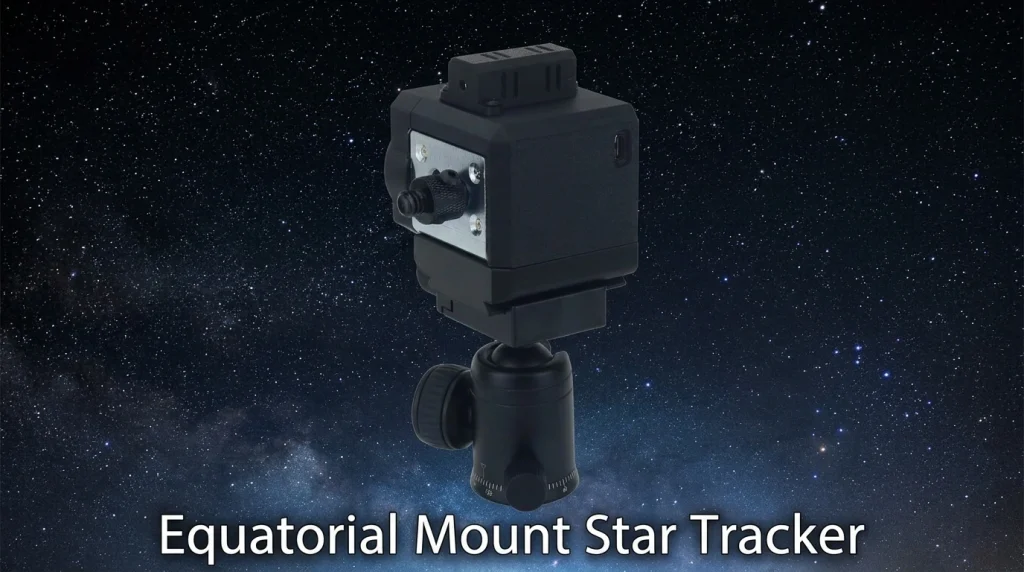
Image Source: Amazon
The TeSeek Equatorial Mount Star Tracker is a compact option for photographers interested in an open-source tracking system with adjustable rotation speeds. Its small size and USB-powered design may suit simple camera-based experiments, time-lapse projects, and lightweight astrophotography setups.
Unlike a traditional star tracker with a built-in battery, this model uses external power through its USB Type-C port.
Key Features
- PETG and carbon-fiber shell construction, according to the supplied specifications.
- Open-source control design using an ESP32-S dual-core controller.
- Stellar, lunar, and customizable rotation speeds.
- Support for Northern and Southern Hemisphere operation.
- USB-powered operation using a compatible USB-A-to-USB-C cable.
- A 38 mm quick-release baseplate.
- Compatibility with camera gimbals and suitable camera mounting accessories.
Performance and Practical Use
The TeSeek mount is small enough to be attractive to photographers who want to experiment with tracking without investing in a larger equatorial mount. Its adjustable rotation speeds also offer flexibility for projects that involve more than standard sidereal tracking.
For astrophotography, the important question is whether the mount can track accurately enough for your camera and lens combination. The supplied product details describe its controls and construction, but they do not establish a verified payload rating or measured tracking accuracy. I would confirm those specifications before using it for long exposures or heavier camera equipment.
Power is another detail to plan for. The mount can run from a power bank, but the supplied instructions specify a USB-A-to-USB-C cable and warn against using a USB-C-to-USB-C cable. Follow the manufacturer’s power requirements rather than assuming every USB cable will work.
The standard 1/4-inch output shaft also means you may need a suitable ball head to attach your camera. Check the thread sizes of your accessories before ordering.
What Could Be Better?
The lack of a verified payload limit and measured tracking accuracy makes it difficult to recommend this mount for demanding deep-sky imaging without further confirmation.
It may also require more hands-on setup than a system with a mature app, clear documentation, and established support.
Who Should Buy It?
Consider the TeSeek tracker if you enjoy open-source hardware, want a compact tracking platform, and are comfortable checking compatibility details before purchasing.
If your main goal is reliable long-exposure astrophotography with a heavier camera and lens, compare its verified specifications with the Sky-Watcher models before making a decision.
Check the latest listing details:
Amazon: Check Price Amazon
AliExpress: Check Price AliExpress
1. GLAMCOR Star Tracker – Best for Smartphone Video, Not Astrophotography
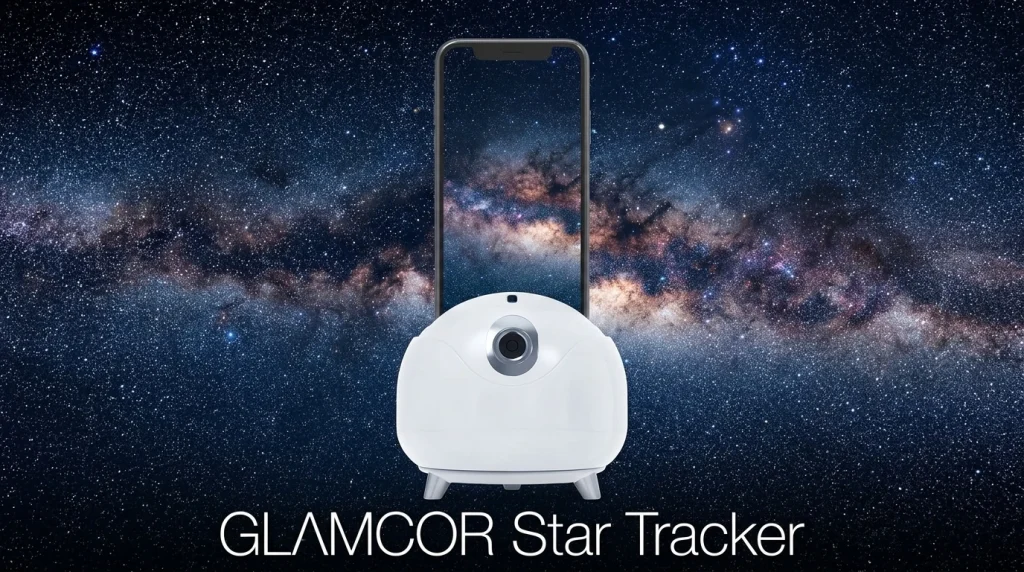
Image Source: Amazon
The GLAMCOR Star Tracker is a motorized smartphone gimbal designed to keep a person’s face in the frame while recording video. It is intended for content creators, livestreamers, educators, and people who record themselves while moving around.
Despite the name, it does not perform the type of astronomical tracking needed for long-exposure photographs of stars, nebulae, or galaxies.
Key Features
- AI-based face recognition and automatic subject tracking.
- Horizontal and vertical movement.
- Gesture controls for starting, pausing, and resuming tracking.
- No app or Bluetooth connection required for its core tracking function.
- Compatibility with supported smartphones and tablets.
- USB-C charging and a built-in battery.
The supplied specifications advertise up to 15 hours of tracking and up to 20 hours in standby mode. Actual battery life will depend on use and operating conditions.
Performance and Practical Use
The GLAMCOR is designed to follow a person rather than compensate for Earth’s rotation. That distinction matters when choosing equipment for night-sky photography.
For example, a phone mounted on this gimbal will not automatically produce the same results as a camera mounted on a properly aligned equatorial star tracker. The device does not replace the motorized sidereal tracking mechanism required for conventional long-exposure astrophotography.
For its intended purpose, the GLAMCOR has a different set of useful features. Gesture controls can make it easier to start recording without touching the phone, while automatic face tracking helps keep the user in the frame during a presentation or tutorial.
GLAMCOR’s official product page describes the device as a dual-axis gimbal with face tracking and gesture recognition.
What Could Be Better?
Its main limitation for this roundup is straightforward: it is not an astronomical star tracker. If you want to photograph the Milky Way, reduce star trails, or capture deep-sky objects, choose a mount designed for those tasks instead.
It is worth considering only if you also need a phone-tracking gimbal for video creation.
Who Should Buy It?
Choose the GLAMCOR if you record tutorials, presentations, or other videos with a smartphone and want automatic face tracking.
For astrophotography, compare the astronomical mounts above instead.
Amazon: Check Price Amazon
AliExpress: Check Price AliExpress
Which Star Tracker Wins?
Choosing the best star tracker depends on what you want to photograph. A beginner capturing the Milky Way with a wide-angle lens has different needs from someone using a telescope to photograph distant galaxies.
Here is how I would choose among the five products based on their supplied specifications and intended uses.
Best Overall: Sky-Watcher Star Adventurer GTi
The Sky-Watcher Star Adventurer GTi is my overall pick because it combines an 11 lb payload capacity with GoTo functionality, an illuminated polar scope, Wi-Fi control, and compatibility with cameras and suitable small telescopes.
Those features make it a strong option for someone who wants to photograph wide-field nightscapes now and move toward more advanced deep-sky imaging later. It offers more automated target finding and equipment flexibility than a basic portable tracker.
However, it is not automatically the best purchase for everyone. If you only want to capture the Milky Way with a lightweight camera and lens, the additional GoTo features may be more than you need.
Best for Portable Wide-Field Photography: Sky-Watcher Star Adventurer 2i Pro Pack
The Star Adventurer 2i Pro Pack is the alternative I would consider first for a simpler, travel-friendly setup. Its motorized tracking, smartphone control, and equatorial base make it a practical choice for wide-field astrophotography.
It is worth comparing the total package price with the GTi before buying. The right choice depends on whether you need GoTo functionality and a higher payload capacity.
Best Lightweight Alternative: OGST Single-Axis Mount
The OGST stands out for its advertised 1.4 kg weight and 4 kg payload capacity. Its open-source control system may appeal to experienced users who want a portable mount with customization options.
Before choosing it, verify the tracking performance, compatibility, and available support for your intended setup.
Best for Open-Source Experimentation: TeSeek Equatorial Mount
The TeSeek is worth investigating if you like customizable tracking speeds and compact hardware. However, its supplied specifications do not establish a verified payload limit or measured tracking accuracy, so I would confirm those details before using it for demanding imaging.
Best for Phone-Based Video: GLAMCOR Star Tracker
The GLAMCOR is designed for face-tracking video. It should not be considered a substitute for an astronomical star tracker.
My final choice: For an all-around astrophotography mount, I would choose the Sky-Watcher Star Adventurer GTi. For a more portable wide-field setup, I would compare the Star Adventurer 2i Pro Pack first.
How to Choose a Star Tracker for Astrophotography
Before buying a star tracker, think about the camera, lens, and targets you plan to use. The following factors will help narrow your options.
1. Payload Capacity
Payload capacity tells you how much equipment a mount is designed to carry. Add the weight of your camera, lens or telescope, mounting hardware, and accessories before comparing the result with the manufacturer’s rating.
A mount with a suitable payload rating gives you more flexibility, but payload capacity alone does not guarantee accurate tracking.
2. Tracking Accuracy
Tracking accuracy matters because even small errors can cause stars to appear elongated during long exposures.
Look for measured tracking specifications when available. Also consider the focal length you plan to use, since tracking errors become easier to see at longer focal lengths.
3. Polar Alignment
An equatorial star tracker must be aligned with the celestial pole to follow the sky correctly. A built-in polar scope or a supported alignment method can make this process easier.
Good polar alignment is especially important when you increase exposure time or use a longer lens.
4. Portability
If you travel to dark-sky locations, the weight of the mount, tripod, counterweights, and power equipment matters.
A compact tracker can be easier to transport, but make sure it can carry your complete camera setup and provide the tracking accuracy you need.
5. GoTo Controls and Connectivity
Basic trackers follow the sky at a set rate, while GoTo mounts can help locate selected celestial objects.
Wi-Fi, smartphone apps, autoguiding connections, and optional hand controllers may be useful, depending on your experience and imaging goals.
You do not need every feature to photograph the night sky. Choose the controls that solve a real problem in your setup.
6. Power and Accessories
Check whether the tracker requires batteries, a separate power supply, a counterweight, an equatorial base, or a tripod.
These items affect the total cost. Confirm exactly what is included in the listing before comparing prices between Amazon and AliExpress.
Frequently Asked Questions
What is the best star tracker for astrophotography?
The Sky-Watcher Star Adventurer GTi is my top choice from this list for photographers who want GoTo controls, an 11 lb payload capacity, and support for compatible camera and telescope setups. The Star Adventurer 2i Pro Pack is worth considering for more portable wide-field photography.
Are star trackers worth it for Milky Way photography?
Yes, a suitable astronomical star tracker can help reduce star trails by moving the camera with the apparent motion of the sky. This allows longer exposures than a stationary tripod typically permits.
However, tracking the sky also causes the landscape to move relative to the camera. For sharp foregrounds, photographers often combine tracked sky exposures with separate stationary-camera foreground exposures.
Can I use a star tracker with a DSLR or mirrorless camera?
Yes. Many astronomical star trackers support DSLR and mirrorless cameras with suitable lenses. Check the mount’s payload capacity, camera attachment, and compatibility with your equipment before buying.
Do I need a telescope to use a star tracker?
No. A camera and compatible lens are enough for many wide-field astrophotography projects. A telescope is useful when you want to photograph smaller or more distant celestial targets, but it adds weight and can place greater demands on tracking accuracy.
Is a more expensive star tracker always better?
No. A larger or more advanced mount may offer GoTo controls and greater payload capacity, but those features may be unnecessary for someone who mainly photographs the Milky Way with a lightweight camera.
Choose according to your equipment, imaging goals, and budget.
Can I use the GLAMCOR Star Tracker for astrophotography?
The GLAMCOR Star Tracker is a face-tracking smartphone gimbal. It is designed to follow a person during video recording, not to track stars for long exposures. For conventional astrophotography, choose a mount specifically designed for astronomical tracking.
Final Thoughts
The best star tracker for your setup depends on the kind of images you want to create. The Sky-Watcher Star Adventurer GTi is my overall choice for its GoTo controls, 11 lb payload capacity, and support for compatible cameras and small telescopes.
For wide-field nightscapes and Milky Way photography, the Star Adventurer 2i Pro Pack offers a more portable alternative. The OGST and TeSeek mounts may also be worth considering, provided their specifications and support meet your needs.
Before purchasing, compare the latest prices, included accessories, return policies, and manufacturer specifications. A tracker that suits your camera and shooting style will be more useful than one with features you never need.
Looking for more ways to save? Visit our homepage for product reviews, current coupon information, and deals that may help you plan your next equipment purchase.
Affiliate disclosure: This article may contain affiliate links. If you buy through one of these links, we may earn a commission at no extra cost to you.