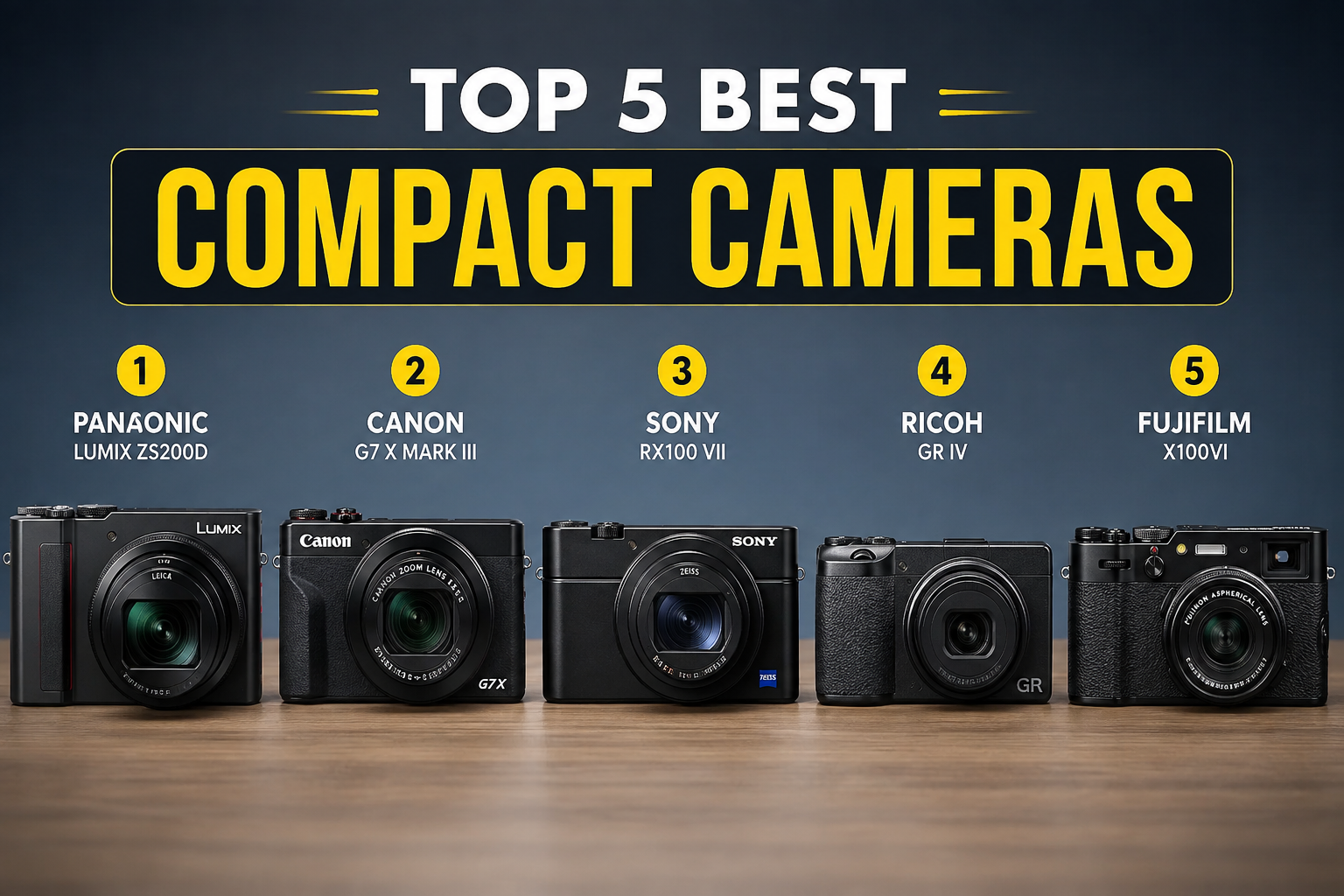
Top 5 Best Compact Cameras in 2026
Smartphone cameras are better than ever. So, why would you still want a dedicated compact camera?
The answer comes down to a few things phones don’t always handle as well: optical zoom, larger sensors, physical controls, faster shooting, better ergonomics, and a more focused photography experience.
The best compact cameras in 2026 can also give you something a smartphone simply can’t always replicate—the feeling and flexibility of using a dedicated camera.
And you don’t necessarily need to carry a huge DSLR or mirror-less camera.
Today’s compact cameras can fit into a small bag while offering impressive image quality, useful zoom ranges, advanced autofocus, and capable video features.
But choosing the right one isn’t easy.
Some are designed mainly for travel and long-range zoom. Others are better for vlogging and YouTube. Some are built specifically around street photography, while premium models focus on image quality and the overall photography experience.
For this list, we’re looking at five very different compact cameras:
- Panasonic Lumix ZS200D – Best for travel and zoom → Amazon affiliate link
- Canon PowerShot G7 X Mark III – Best for vlogging and creators → Amazon affiliate link
- Sony RX100 VII – Best for autofocus and versatility → Amazon affiliate link
- Ricoh GR IV – Best for street photography → Amazon affiliate link
- Fujifilm X100VI – Best premium photography experience → Amazon affiliate link
Quick Comparison: Best Compact Cameras in 2026
| Camera | Best For | Sensor | Key Feature |
| Panasonic Lumix ZS200D | Travel & zoom | 20.1MP | 15x optical zoom |
| Canon PowerShot G7 X Mark III | Vlogging | 20.1MP 1-inch | 24–100mm f/1.8–2.8 lens |
| Sony RX100 VII | Autofocus & travel | 20.1MP 1-inch | 24–200mm zoom |
| Ricoh GR IV | Street photography | 24.2MP APS-C | Compact APS-C design |
| Fujifilm X100VI | Photography enthusiasts | 40.2MP | IBIS + Film Simulations |
1. Panasonic Lumix ZS200D – Best Compact Camera for Travel
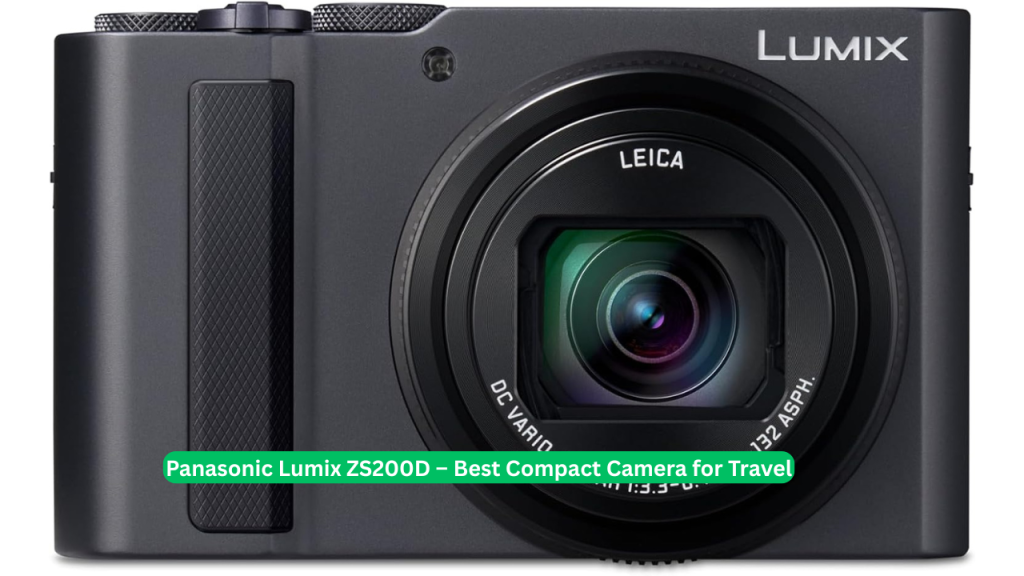
Image Source: Amazon
If there’s one thing that immediately separates the Panasonic Lumix ZS200D from many pocket-sized cameras, it’s the zoom.
This camera combines a 20.1MP sensor with a Leica-standard lens covering an impressive 24–360mm equivalent focal range.
That’s a 15x optical zoom.
And for a travel camera, that matters.
Imagine you’re walking through a city and spot an interesting building across the street. Later, you’re watching a performance from the back of a venue. Maybe you’re standing at a viewpoint and want a closer shot of something in the distance.
With a basic compact camera or smartphone, you may have to crop the image heavily or simply accept that your subject will look small.
The ZS200D gives you another option. Just zoom in.
The 360mm equivalent telephoto reach lets you frame distant subjects without carrying a separate telephoto lens.
For travelers who want to pack light, that’s a major advantage.
4K Video Adds More Versatility
The ZS200D isn’t limited to still photography.
It can record 4K video, making it useful for travel clips, family videos, and everyday content.
There’s also a 4K Photo mode at 30fps, which can help when you’re trying to capture a fast-moving moment and don’t want to rely on a single shutter press.
What About Low-Light Photography?
This is where expectations matter.
The camera’s 20.1MP sensor, built-in flash, and image stabilization can help when you’re shooting in less-than-perfect lighting.
But this is still a compact camera with a relatively small sensor.
So while it can be useful indoors or around sunset, it shouldn’t be expected to deliver the same low-light performance as a larger APS-C camera such as the Ricoh GR IV or Fujifilm X100VI.
Macro Photography Is a Nice Bonus
At the wide end, the ZS200D can focus from around 1.18 inches.
That opens up some useful possibilities for photographing flowers, food, small objects, and other close-up subjects.
You also get 22 filter effects, so you can experiment with different looks directly in the camera.
Easy Photo Transfer and USB-C Charging
The Panasonic Image App allows the camera to connect to a smartphone through Bluetooth and Wi-Fi, making it easier to transfer photos and videos.
The USB-C charging support is also useful for travel because you can charge the camera from a compatible adapter or power bank.
Panasonic Lumix ZS200D Pros
- Excellent 15x optical zoom
- Useful 24–360mm equivalent focal range
- Compact travel-friendly design
- 4K video recording
- 4K Photo mode
- Image stabilization
- Close focusing capability
- Built-in flash
- Wi-Fi and Bluetooth
- USB-C charging
Panasonic Lumix ZS200D Cons
- Smaller sensor than APS-C compact cameras
- Low-light performance has limitations
- Fixed lens
- Not designed for photographers who need an interchangeable-lens system
Who Should Buy the Panasonic Lumix ZS200D?
The ZS200D makes the most sense if your priority is versatility without bulk.
It’s particularly suitable for travelers, families, beginners, casual photographers, and anyone who wants a powerful pocketable zoom camera.
If you’re searching for the best compact camera for travel, the ZS200D’s 15x optical zoom is one of the biggest reasons to consider it.
Panasonic ZS200D vs Other Compact Cameras
Compared with the Canon G7 X Mark III, the Panasonic gives you much more zoom.
Compared with the Sony RX100 VII, it also offers more maximum reach, while the Sony focuses more heavily on autofocus and high-speed shooting.
Compared with the Ricoh GR IV or Fujifilm X100VI, the Panasonic is more about flexibility and reach than large-sensor image quality.
The Bottom Line
The Panasonic Lumix ZS200D is a strong choice for anyone who wants a compact camera that can cover a surprisingly wide range of situations.
Its 15x optical zoom, 4K video, stabilization, macro capability, wireless connectivity, and travel-friendly design make it particularly versatile.
The biggest compromise is the smaller sensor.
Best for: Travel, everyday photography, distant subjects, and anyone who wants a powerful zoom without carrying extra lenses.
2. Canon PowerShot G7 X Mark III – Best Compact Camera for Vlogging
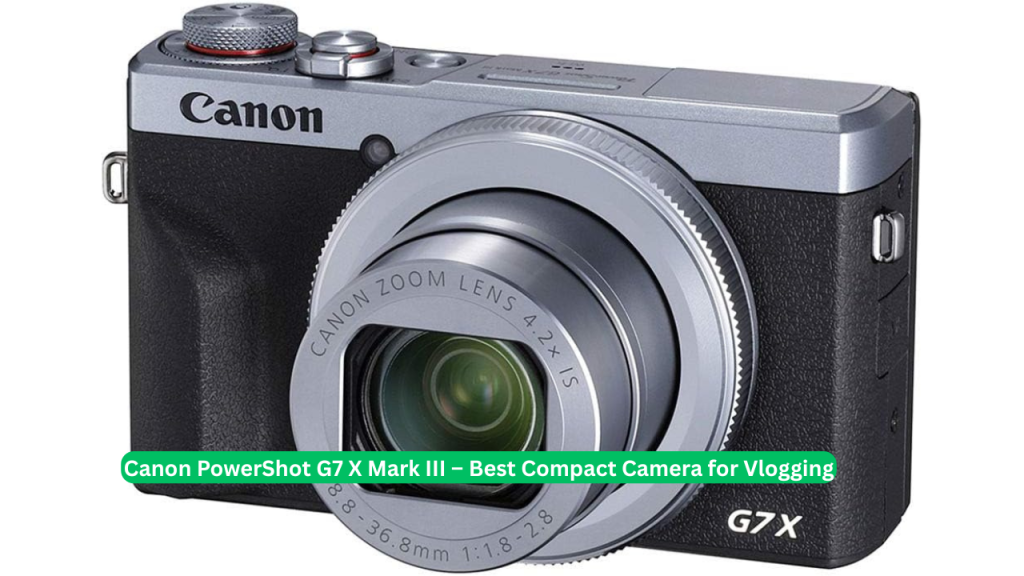
Image Source: Amazon
If you’re looking for a compact camera for YouTube or vlogging, the Canon PowerShot G7 X Mark III deserves serious attention.
It features a 20.1MP 1-inch stacked CMOS sensor, DIGIC 8 image processor, and a 24–100mm f/1.8–2.8 lens with optical image stabilization.
That lens is one of the main reasons this camera is so interesting for creators.
A Bright Lens in a Small Camera
The lens starts at 24mm, which is a useful focal length for handheld video.
More importantly, it has a bright f/1.8 aperture at the wide end.
That can be helpful when you’re filming indoors, shooting during the evening, or simply trying to get a more visually appealing background.
4K Video and Slow Motion
For video creators, the G7 X Mark III supports 4K recording at 30fps.
It also supports Full HD recording up to 120fps.
It Can Also Work as a Webcam
The Canon G7 X Mark III can be used as a high-quality webcam through Canon’s supported webcam software or by using a clean HDMI connection.
So one compact camera can potentially serve multiple purposes.
Canon PowerShot G7 X Mark III Pros
- 1MP 1-inch sensor
- Bright f/1.8–2.8 lens
- 24–100mm focal range
- 4K video
- Full HD up to 120fps
- Optical image stabilization
- Compact design
- Webcam functionality
Canon PowerShot G7 X Mark III Cons
- Only 4.2x optical zoom
- Less reach than the Panasonic and Sony
- Battery life may be limiting for long recording sessions
- Not designed for interchangeable lenses
Who Should Buy the Canon G7 X Mark III?
This camera makes the most sense for YouTubers, vloggers, travel creators, and people who want a small camera primarily for content creation.
If your main goal is photography of distant subjects, the Panasonic or Sony may be better choices.
If you’re looking for a best compact camera for vlogging, the G7 X Mark III’s bright lens and video features make it particularly appealing.
The Bottom Line
The Canon isn’t the zoom champion here. Instead, it focuses on portability, video, and creator-friendly features.
3. Sony RX100 VII – Best Compact Camera for Autofocus and Zoom
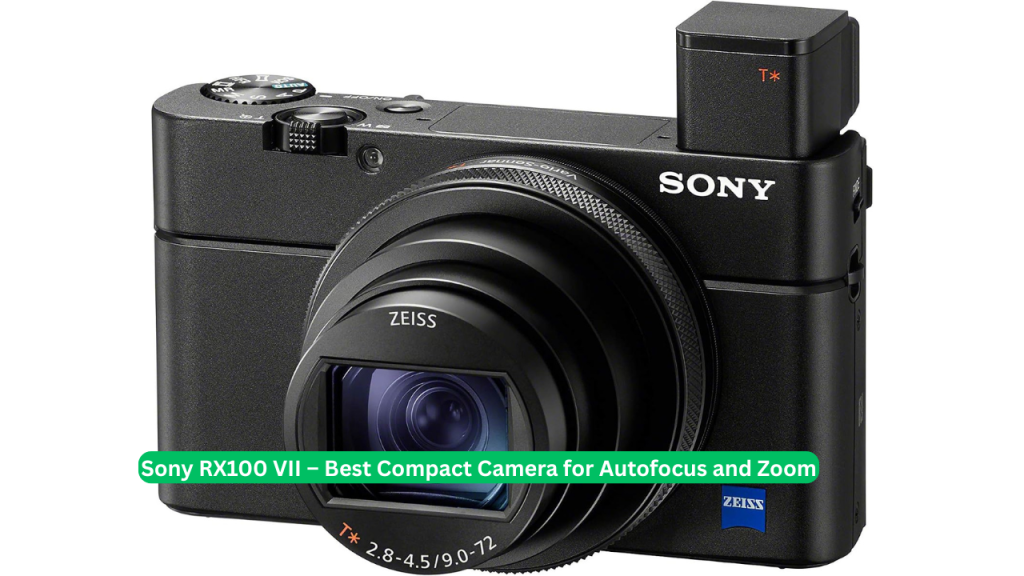
Image Source: Amazon
The Sony RX100 VII is one of the most feature-packed cameras in this category.
It combines a 20.1MP 1-inch stacked CMOS sensor with a ZEISS 24–200mm f/2.8–4.5 zoom lens.
That gives you a useful combination of portability and telephoto reach.
Fast Autofocus for Moving Subjects
The RX100 VII features 357 phase-detection autofocus points and 425 contrast-detection points.
Sony rates the autofocus speed at as fast as 0.02 seconds.
For everyday photography, that can make a difference when your subject isn’t sitting perfectly still.
High-Speed Continuous Shooting
The RX100 VII can shoot at up to 20 frames per second with blackout-free shooting.
That’s particularly useful for action.
24–200mm Zoom Range
The ZEISS 24–200mm equivalent lens gives you a versatile range.
At 24mm, you can capture landscapes, buildings, and wider travel scenes.
At 200mm, you can get much closer to distant subjects.
Sony RX100 VII Pros
- 1MP stacked CMOS sensor
- Fast autofocus
- 357 phase-detection AF points
- 425 contrast-detection points
- Up to 20fps blackout-free shooting
- 24–200mm zoom
- Compact design
- Excellent travel versatility
Sony RX100 VII Cons
- f/2.8–4.5 lens isn’t especially bright at the telephoto end
- Battery life can be limiting
- Small body can make extended manual operation less comfortable
- Premium compact-camera pricing
Who Should Buy the Sony RX100 VII?
The RX100 VII is a strong choice for travel photographers, parents, pet owners, street photographers, and anyone who regularly photographs moving subjects.
Compared with the Canon G7 X Mark III, Sony offers considerably more zoom and a more advanced autofocus system.
If you’re looking for a best pocket camera with zoom, this is one of the strongest options to consider.
The Bottom Line
The RX100 VII is an excellent choice if you want a tiny camera that can react quickly when the action starts.
4. Ricoh GR IV – Best Compact Camera for Street Photography
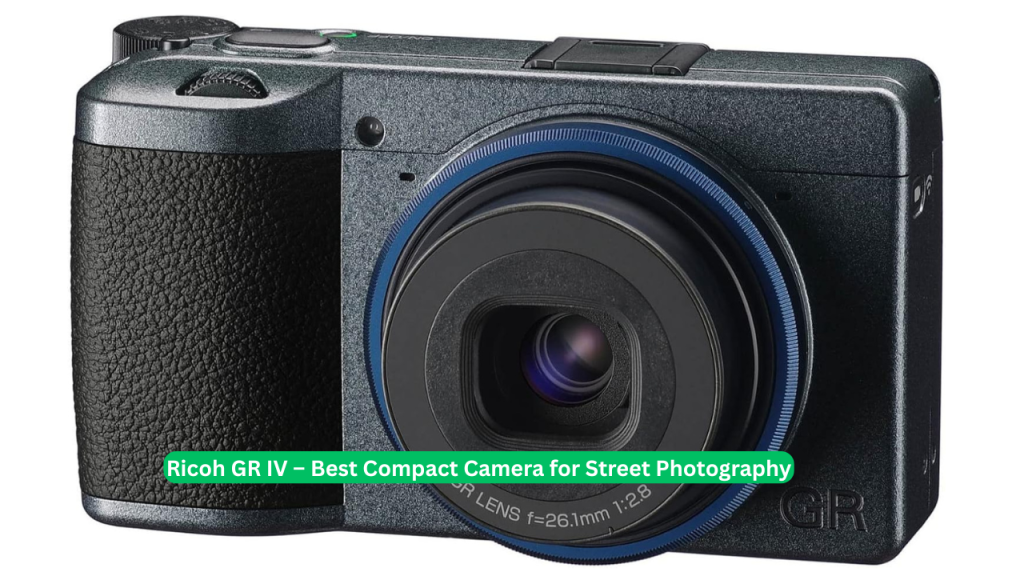
Image Source: Amazon
The Ricoh GR IV takes a completely different approach to compact-camera design.
Instead of trying to offer a huge zoom range, it focuses on image quality, portability, and street photography.
It features a 24.2MP APS-C sensor and a 26.1mm lens, which is approximately 40mm equivalent in 35mm terms.
Why a Fixed Lens Can Be an Advantage
Street photography is often about reacting quickly.
A fixed focal length encourages you to work with what you have.
You move closer. You move farther away. You change your angle. You think more carefully about composition.
Because the camera is compact, it’s easier to carry with you throughout the day.
APS-C Image Quality in a Compact Body
One of the major advantages of the GR IV is its 24.2MP APS-C sensor.
An APS-C sensor is considerably larger than the sensors found in many traditional compact cameras.
The camera also supports 14-bit RAW, giving photographers additional flexibility when editing their images.
High ISO Flexibility
The processor and sensor combination also allow the camera to reach an ISO of 102,400.
That gives you more exposure flexibility when lighting becomes difficult.
Ricoh GR IV Pros
- 2MP APS-C sensor
- Very compact design
- Excellent for street photography
- High-resolution imaging
- 14-bit RAW support
- Portable enough for everyday carry
- Fixed focal length encourages intentional composition
Ricoh GR IV Cons
- No optical zoom
- Not ideal for wildlife or sports
- Fixed-lens design isn’t suitable for everyone
- Less versatile than a zoom compact camera
Who Should Buy the Ricoh GR IV?
The GR IV is best suited to street photographers, travel photographers, enthusiasts, and people who value portability and image quality over zoom flexibility.
If you’re searching for the best compact camera for street photography, the GR IV is a particularly interesting choice.
The Bottom Line
The Ricoh GR IV isn’t trying to be a camera for everyone. It’s for photographers who know what they want—and appreciate a small camera that gets out of the way.
5. Fujifilm X100VI – Best Premium Compact Camera for Photography
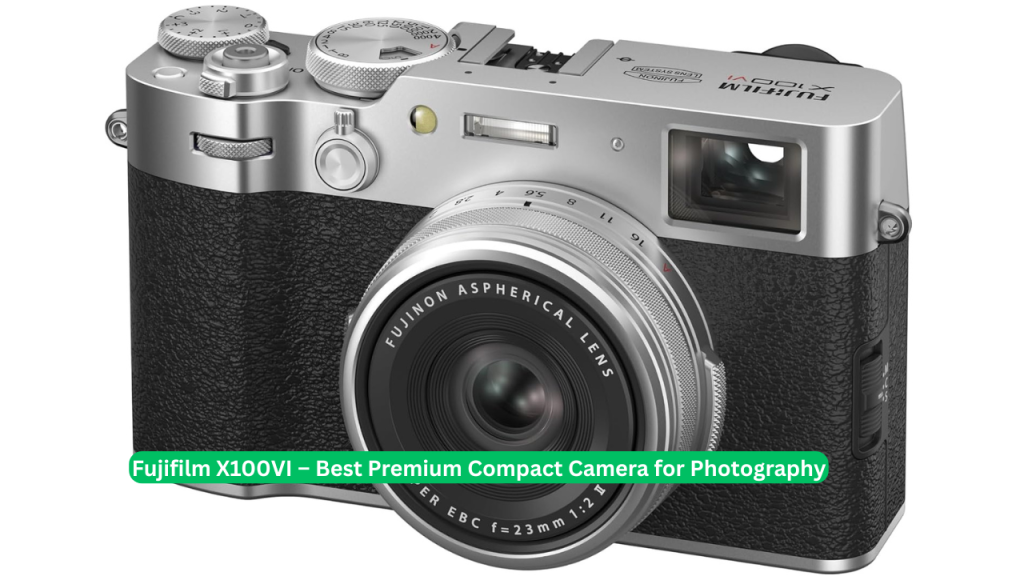
Image Source: Amazon
The Fujifilm X100VI combines a classic camera design with modern imaging technology.
It features a 40.2MP sensor, Fujifilm’s X-Processor 5, and up to 6 stops of in-body image stabilization.
It also has a fixed lens and a design inspired by traditional cameras.
40.2MP Resolution and APS-C Image Quality
The X100VI’s 40.2MP sensor provides plenty of resolution for detailed photographs and cropping.
The camera also includes an internal 4-stop ND filter, which can help manage exposure in bright conditions.
There’s also a digital teleconverter feature for getting closer to your subject without physically changing the lens.
Up to 6 Stops of Image Stabilization
One of the biggest upgrades for the X100VI is its in-body image stabilization system.
Fujifilm rates the stabilization at up to 6 stops.
The system uses internal gyro sensors to detect movement across five axes.
6.2K Video and 4K 60fps
The X100VI supports video recording up to 6.2K at 30fps and 4K at 60fps.
The camera also benefits from Fujifilm’s newer autofocus technology and subject-recognition capabilities.
Film Simulations Are a Big Part of the Experience
The X100VI includes 20 Film Simulation modes, including REALA ACE.
These allow you to choose a particular look while you’re shooting.
Fujifilm X100VI Pros
- 2MP APS-C sensor
- Up to 6 stops of IBIS
- Excellent Film Simulation modes
- Advanced subject-recognition autofocus
- 2K video
- 4K at 60fps
- Premium compact design
- Strong choice for street and everyday photography
- Internal ND filter
Fujifilm X100VI Cons
- Fixed lens
- No optical zoom
- Premium price
- Not ideal for distant wildlife or sports
- May be more camera than casual users need
Who Should Buy the Fujifilm X100VI?
The X100VI is aimed at photography enthusiasts, street photographers, travelers, creators, and anyone who wants a premium compact camera with a traditional photography experience.
Compared with the Ricoh GR IV, the X100VI offers higher resolution, image stabilization, and Fujifilm’s Film Simulation system.
Compared with the Sony RX100 VII and Panasonic ZS200D, however, you lose the flexibility of a zoom lens.
The Bottom Line
The X100VI isn’t the obvious choice if maximum zoom or pocketability is your only priority. But if you care about image quality, controls, stabilization, and the overall experience of photography, it’s one of the most compelling premium compact cameras available.
Which Compact Camera Should You Buy in 2026?
Best Compact Camera for Travel: Panasonic Lumix ZS200D
If you’re traveling and want maximum flexibility from a small camera, the Panasonic Lumix ZS200D is an excellent choice. Its 15x optical zoom is the main attraction.
Best Compact Camera for Vlogging: Canon PowerShot G7 X Mark III
If your priority is YouTube, vlogging, or social media content, the Canon PowerShot G7 X Mark III is a strong option.
Best Compact Camera for Autofocus: Sony RX100 VII
If you’re constantly photographing moving subjects, the Sony RX100 VII is difficult to ignore. Its fast autofocus, 20fps blackout-free shooting, and 24–200mm zoom make it versatile.
Best Compact Camera for Street Photography: Ricoh GR IV
The Ricoh GR IV is the specialist here. Its APS-C sensor, compact design, and fixed focal length make it particularly appealing to street photographers.
Best Premium Compact Camera: Fujifilm X100VI
The Fujifilm X100VI is the choice for photographers who want more than just a small camera. Its 40.2MP sensor, IBIS, Film Simulations, and advanced autofocus create a traditional photography experience.
Compact Camera Buying Guide: What Should You Look For?
1. Sensor Size
Sensor size has a major impact on image quality. Larger sensors can provide advantages in low-light performance, dynamic range, and background separation. The Ricoh GR IV and Fujifilm X100VI use APS-C sensors, while the Panasonic, Canon, and Sony use smaller 1-inch-class sensors.
2. Optical Zoom
If you’re buying a camera for travel, zoom should be high on your list. Optical zoom lets you get closer to your subject using the camera’s lens rather than simply enlarging pixels digitally.
3. Fixed Lens vs Zoom Lens
A zoom lens gives you more flexibility. A fixed lens can encourage a more deliberate approach to composition. Neither is automatically better; it depends on how you shoot.
4. Video Features
If you’re buying a camera for YouTube or vlogging, look beyond megapixels. Pay attention to 4K recording, frame rates, stabilization, autofocus, lens aperture, webcam capabilities, audio options, and battery life.
5. Autofocus
Autofocus becomes particularly important if you’re photographing children, pets, sports, or other moving subjects. The Sony RX100 VII stands out with its sophisticated phase-detection and contrast-detection autofocus system.
6. Portability
A camera doesn’t help much if you don’t want to carry it. Think about where you’ll actually use it and whether it will live in your pocket, a small shoulder bag, or a travel backpack.
Compact Camera vs Smartphone: Is a Dedicated Camera Still Worth It?
Modern smartphones can produce excellent images, especially in good lighting. They’re also incredibly convenient.
But a dedicated compact camera can still make sense if you need:
- Better optical zoom
- Larger sensors
- Physical camera controls
- Faster continuous shooting
- More traditional photography controls
- Better reach for distant subjects
- Dedicated camera ergonomics
For example, a smartphone may be perfect for quick everyday photos. But if you’re going on a wildlife trip, a concert, or a long vacation where you expect to photograph distant subjects, the optical zoom of a camera such as the Panasonic ZS200D or Sony RX100 VII can be a major advantage.
Frequently Asked Questions
What is the best compact camera in 2026?
There isn’t one perfect camera for everyone. The Panasonic Lumix ZS200D is particularly strong for travel and zoom, the Canon G7 X Mark III is well suited to vlogging, the Sony RX100 VII is excellent for autofocus and versatility, the Ricoh GR IV is aimed at street photographers, and the Fujifilm X100VI is a premium choice for photography enthusiasts.
What is the best point-and-shoot camera for travel?
The Panasonic Lumix ZS200D is one of the strongest options for travel because of its compact design and 15x optical zoom. The Sony RX100 VII is another strong option if you want a combination of zoom, autofocus, and high-speed shooting.
Is a compact camera better than a smartphone?
Not necessarily for everyone. Smartphones are more convenient and excellent for everyday photography. A compact camera can be a better choice if you want optical zoom, a larger sensor, physical controls, faster shooting, or a dedicated photography experience.
What is the best compact camera for vlogging?
The Canon PowerShot G7 X Mark III is particularly appealing for vlogging because of its compact design, bright 24–100mm lens, 4K video, Full HD 120fps, stabilization, and webcam functionality.
What is the best compact camera for street photography?
The Ricoh GR IV and Fujifilm X100VI are both strong choices for street photography. Their fixed-lens designs encourage a more deliberate approach to composition, while their larger sensors provide strong image quality.
Which compact camera has the best zoom?
The Panasonic Lumix ZS200D offers a particularly impressive 15x optical zoom, covering a 24–360mm equivalent focal range. That makes it one of the most versatile options here for distant subjects.
Is the Sony RX100 VII good for travel?
Yes. Its compact design, 24–200mm equivalent zoom, fast autofocus, and high-speed shooting make it particularly versatile for travel photography.
Is the Fujifilm X100VI good for beginners?
It can be, but it is primarily aimed at photographers who appreciate manual controls, a fixed focal length, and a more traditional photography experience. Someone looking for simple point-and-shoot operation may prefer a zoom compact camera.
Should I buy a camera with a fixed lens?
A fixed-lens camera can be an excellent choice if you mainly shoot street photography, everyday photography, portraits, or travel scenes where you can physically move closer or farther from your subject. If you photograph distant subjects, a zoom camera is usually more practical.
What should I look for when buying a compact camera?
Start with the way you plan to use it. Consider sensor size, optical zoom, lens aperture, autofocus, video capabilities, stabilization, battery life, portability, and whether you prefer a fixed or zoom lens.
Final Verdict: Which One Is Right for You?
The best compact camera isn’t necessarily the camera with the biggest sensor, the highest megapixel count, or the most expensive price tag.
It’s the camera that fits your style of photography.
If you want maximum zoom in a small body, the Panasonic Lumix ZS200D is a strong choice.
If you’re focused on YouTube, vlogging, and content creation, the Canon PowerShot G7 X Mark III makes a lot of sense.
If you need fast autofocus, high-speed shooting, and a versatile zoom, the Sony RX100 VII stands out.
If your priority is street photography and portability, the Ricoh GR IV is one of the most interesting options on this list.
And if you want a premium photography experience with high resolution, stabilization, and Fujifilm’s Film Simulations, the Fujifilm X100VI is hard to ignore.
At the end of the day, the best camera is the one you’ll actually carry with you.
Because having a technically impressive camera sitting at home doesn’t help much when the perfect photo opportunity appears.
Our Picks at a Glance
- Best for travel and zoom: Panasonic Lumix ZS200D
- Best for vlogging: Canon PowerShot G7 X Mark III
- Best for autofocus: Sony RX100 VII
- Best for street photography: Ricoh GR IV
- Best premium option: Fujifilm X100VI
Looking for the best compact camera in 2026? Start with the type of photography you actually do, then choose the camera that fits that need—not simply the camera with the longest list of specifications.
Affiliate Disclosure
This article may contain affiliate links. If you purchase a product through one of these links, we may earn a commission at no additional cost to you. Our recommendations are based on the features, capabilities, and intended use of the products discussed.